La première fois que Liv Schulman obtient de l’argent pour faire un film – une bourse de 1000 dollars décernée par une fondation privée pour l’art – elle décide de documenter la perte rapide de cette somme en conversion de devises. La Desaparición (2013) la montre passant de bureaux de change en bureaux de change à la frontière entre le Brésil, le Paraguay et l’Argentine où l’inflation ne cesse de croître depuis la crise économique des années 2000. À mesure qu’elle perd le contrôle de son argent, l’artiste donne à la caméra des signes de perte de contrôle d’elle-même, glissant vers un état paranoïaque qui l’empêche de distinguer sa propre conscience de son capital.
La ville devient alors son plateau de tournage favori ainsi qu’un personnage à part entière. Modelée et déformée par son activité économique, c’est un organisme vivant où les acteur·ices sont introduit·es comme des éléments perturbateurs et jouent des êtres profondément perturbés.
Car au cœur des films de Liv Schulman, on trouve les affections psychiatriques ordinaires des populations vivant à l’ère de l’économie de marché. Elles se manifestent dans des corps aux désirs déréglés et des monologues grandioses de mélancolie d’où surgissent des prophéties
post-capitalistes. Ses personnages aliénés, parmi lesquels s’impose la figure du détective -flâneur à partir de la série en trois saisons Control (2011-2016), ne cherchent pas tant leur salut qu’une relation physique avec le réel et, avant toute chose, une signification à ce qu’il est en train de se passer.
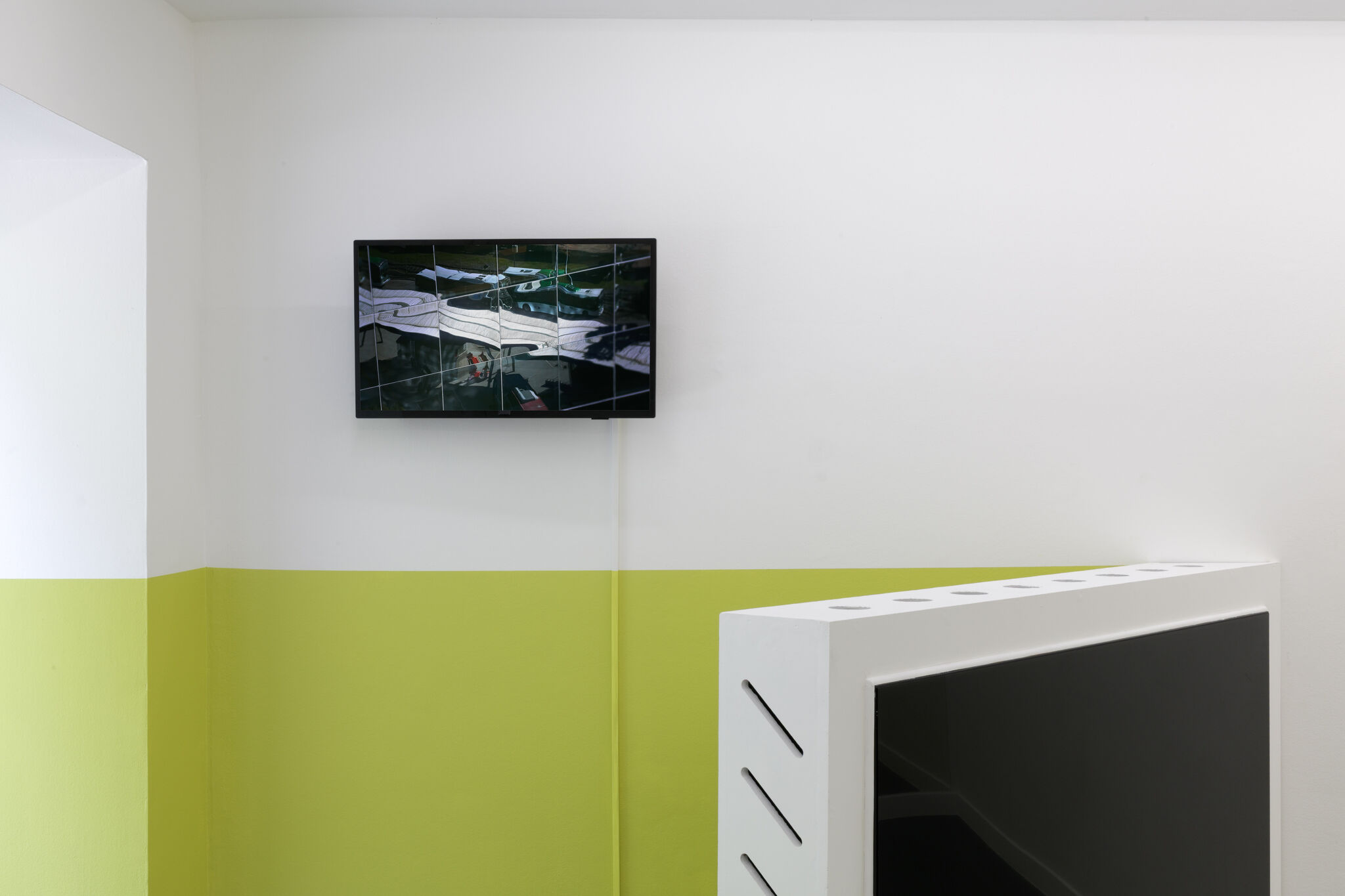
Sirco Ceguro (que l’on pourrait traduire, en conservant l’inversion des lettres, par “Sirque Cécurisé”), a été tourné dans le Microcentro à Buenos Aires, dont les grattes-ciels aux vitres sans tain renvoient une image identique à n’importe quel quartier d’affaire dans le monde tout en dissimulant une économie au bord de l’effondrement. À l'exception d’une scène d’espionnage, Liv Schulman décide de ne filmer que la surface miroitante des façades. Ainsi l’image montre-t-elle sans cesse le reflet de la mise en scène, laquelle est renvoyée en même temps que la réalité autour, dans un effet de contamination réciproque et de réversibilité dont l’artiste a le secret.
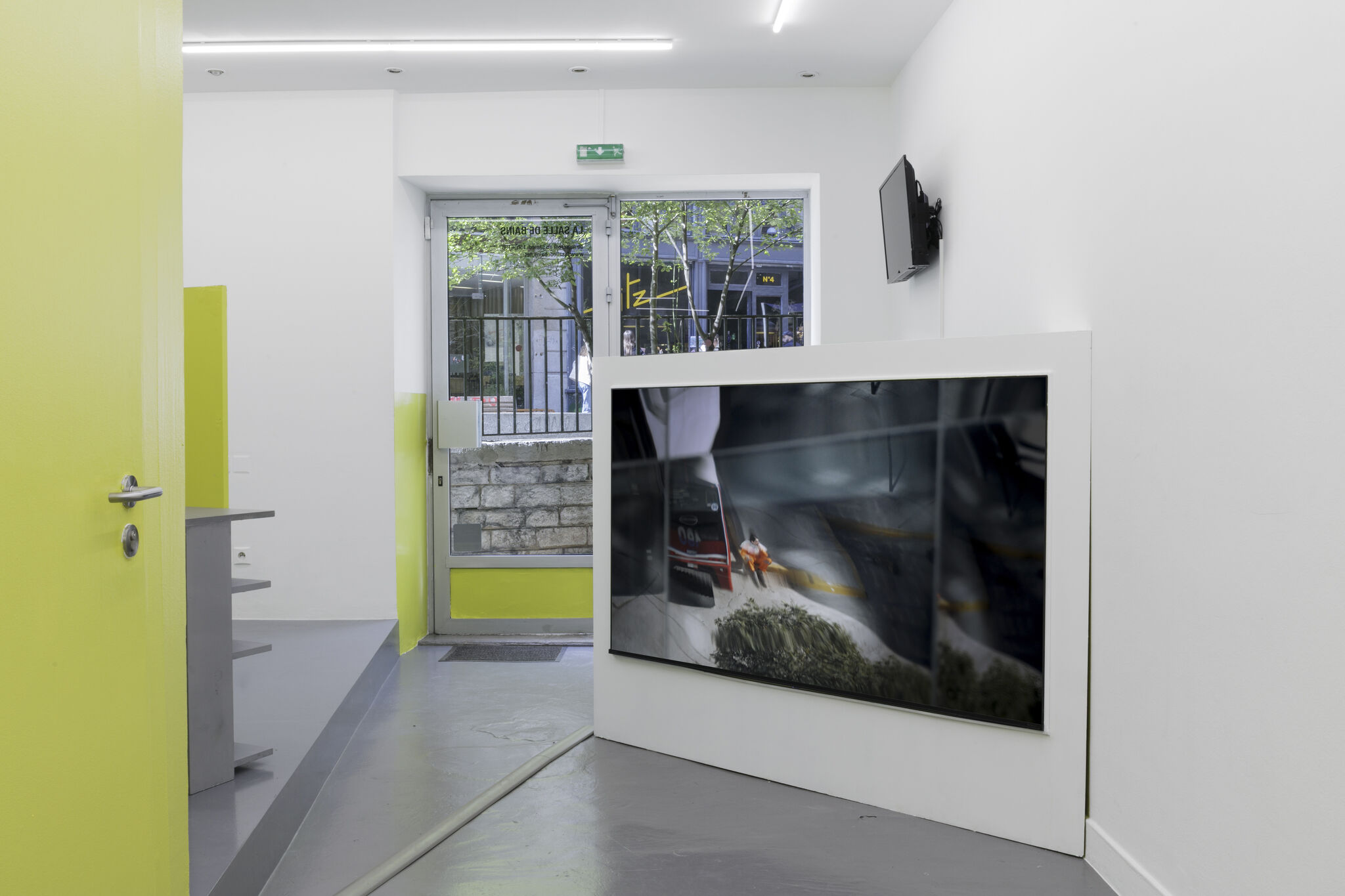
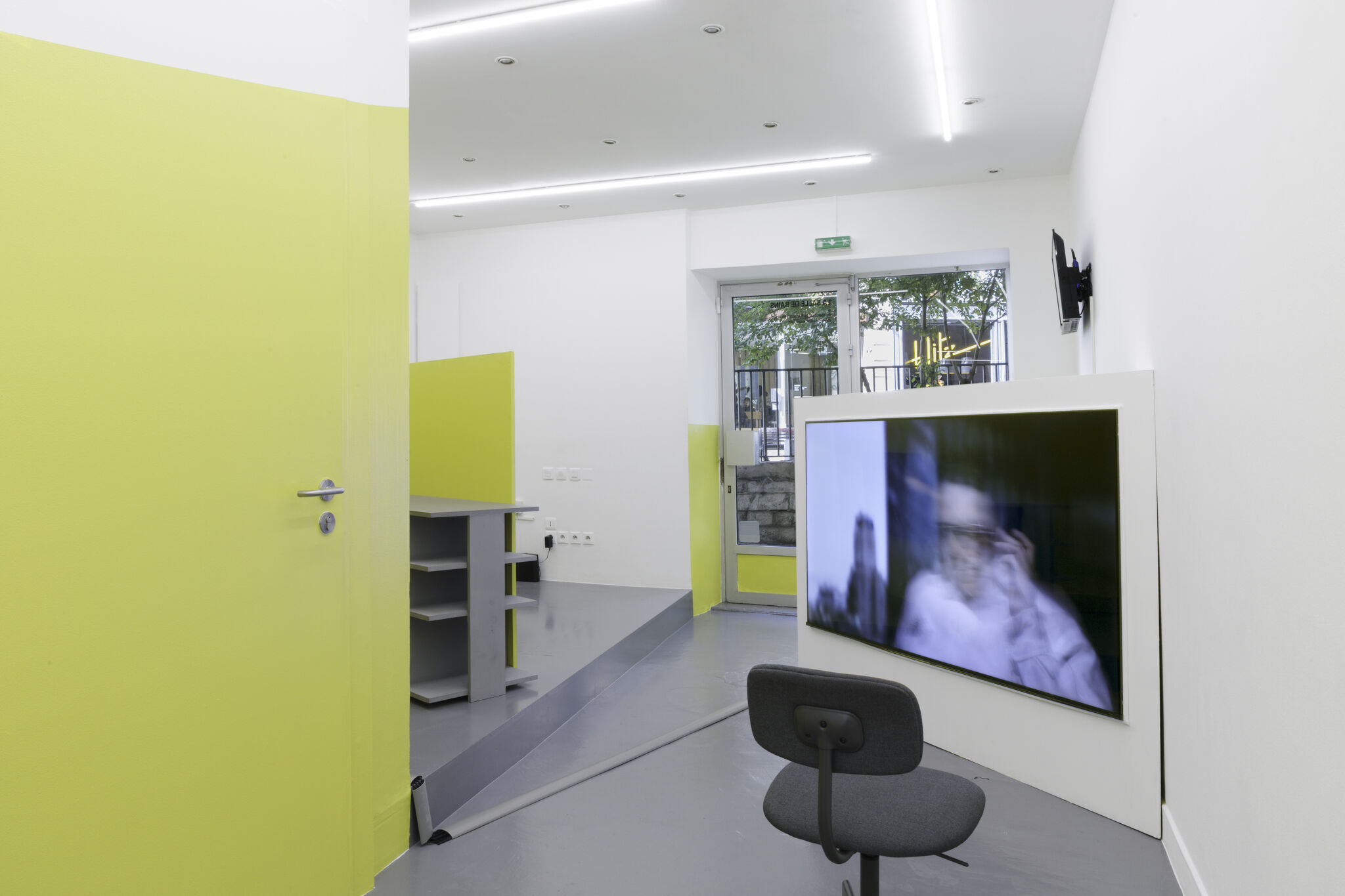
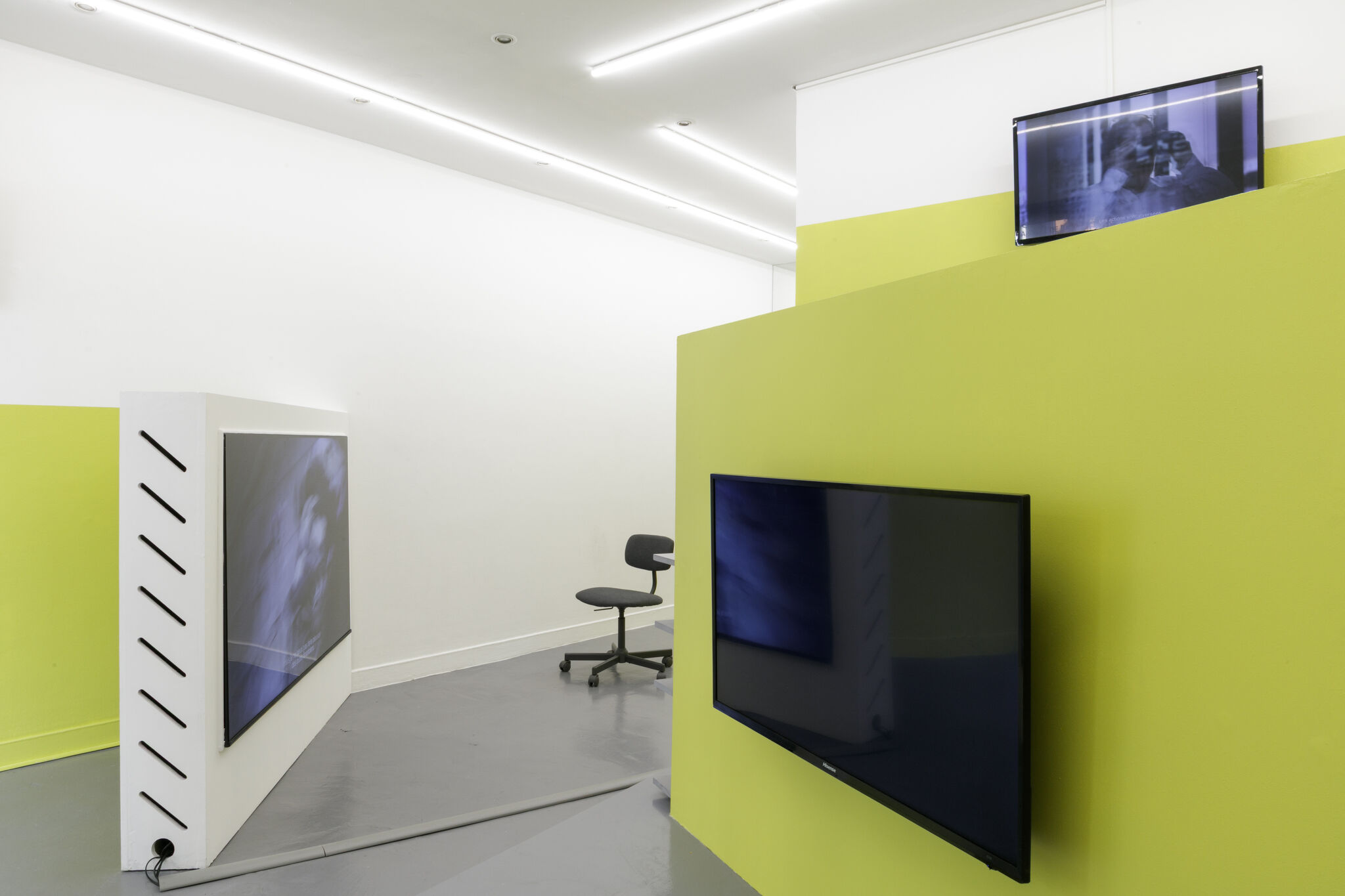
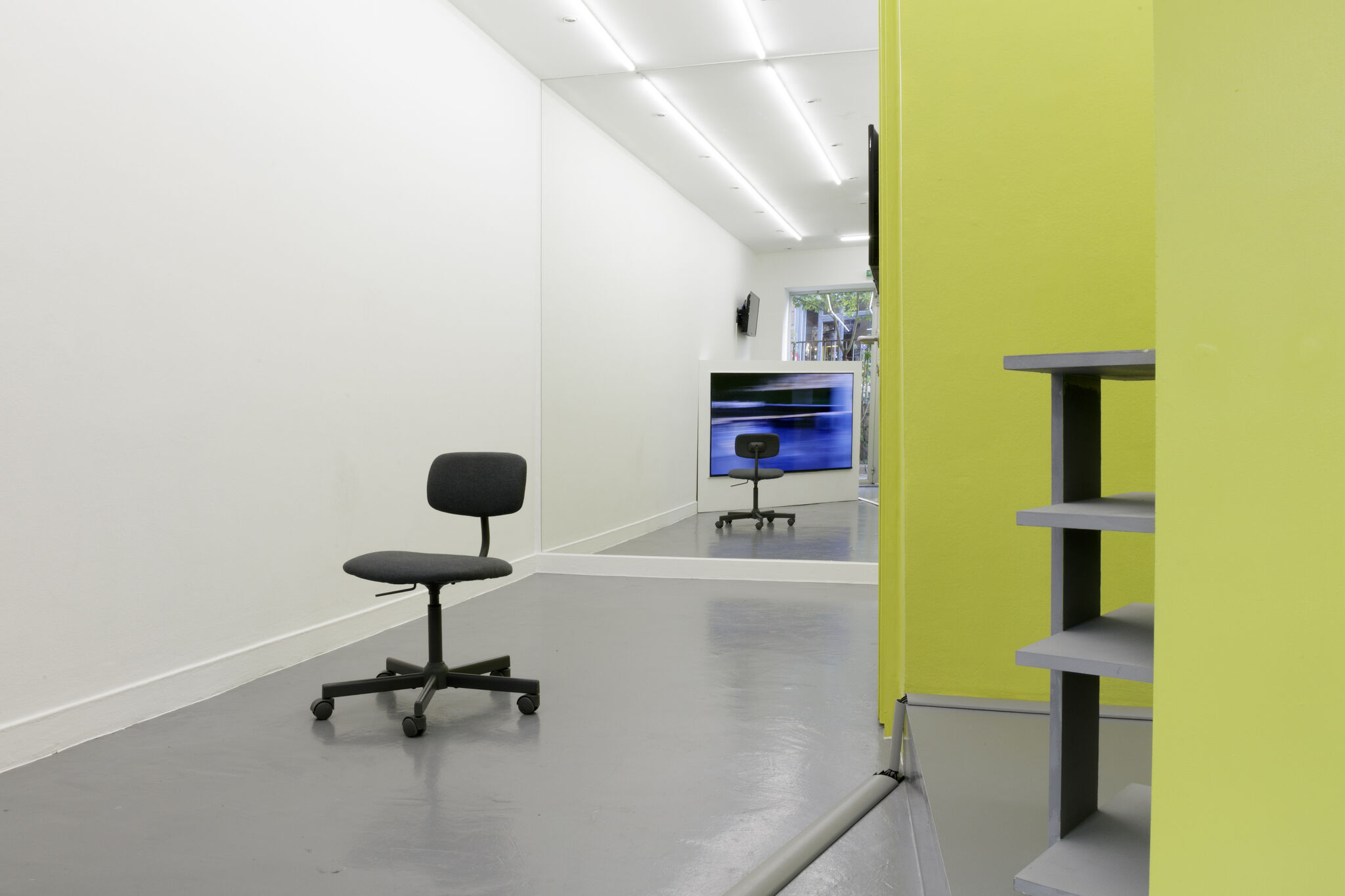
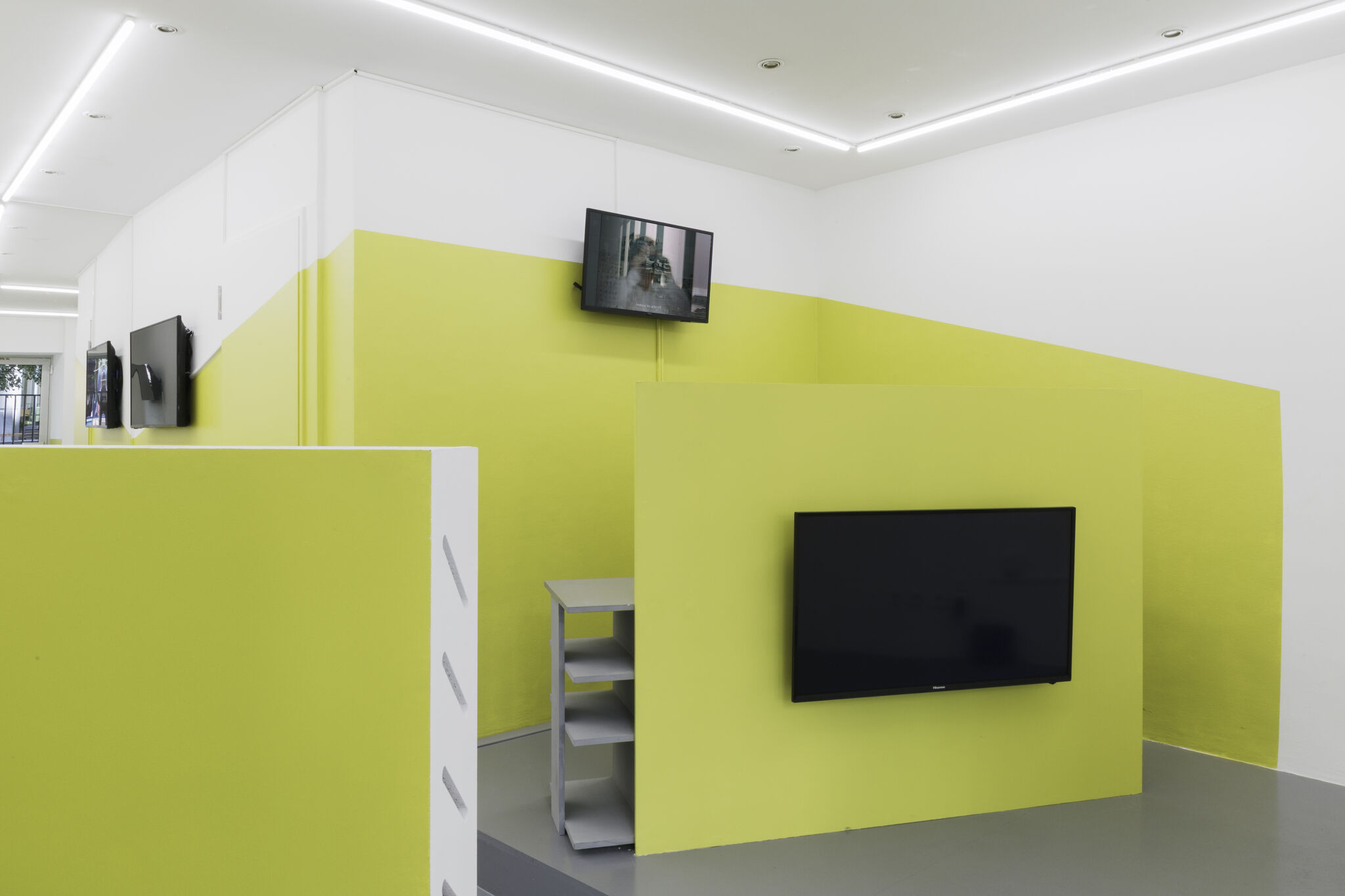
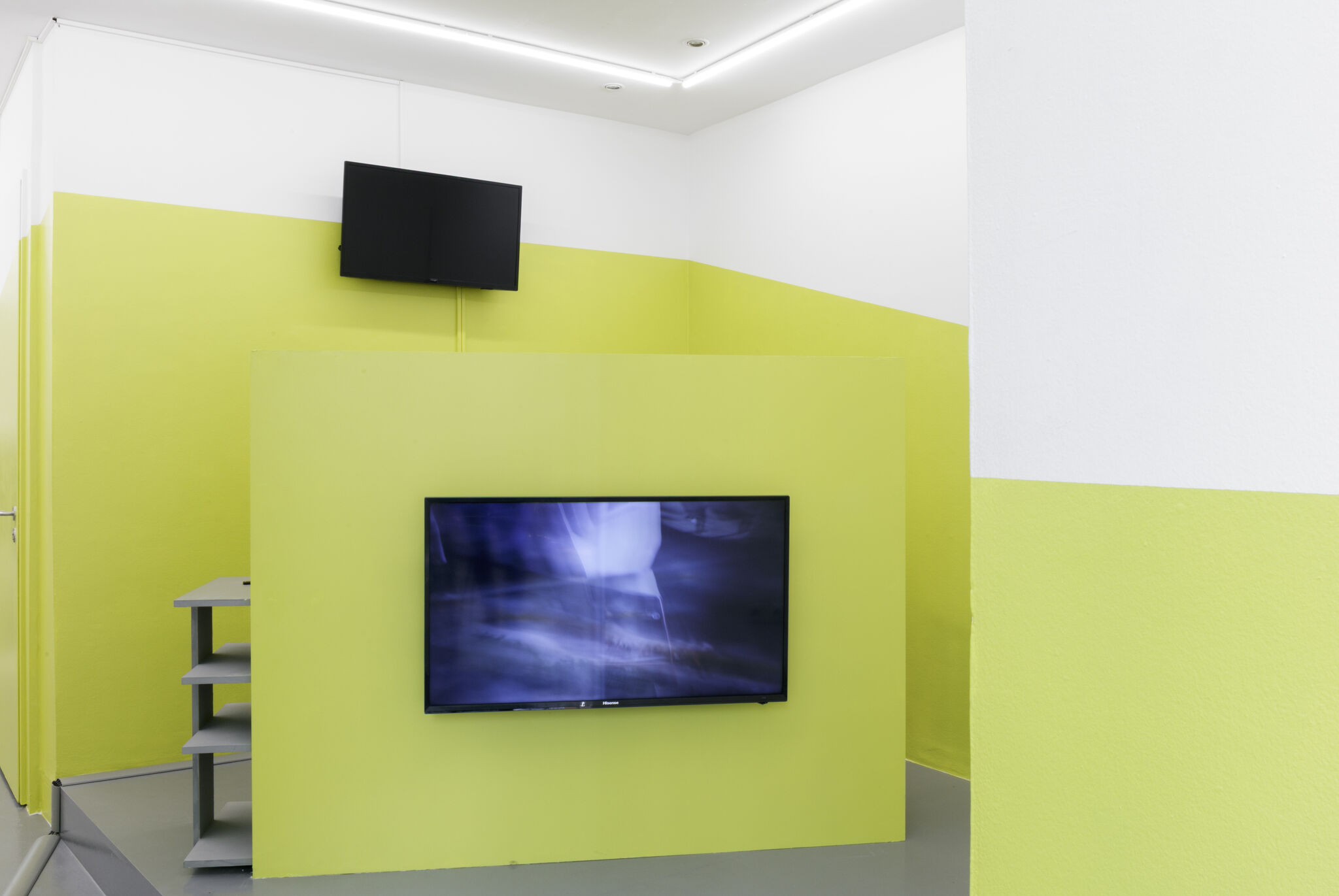
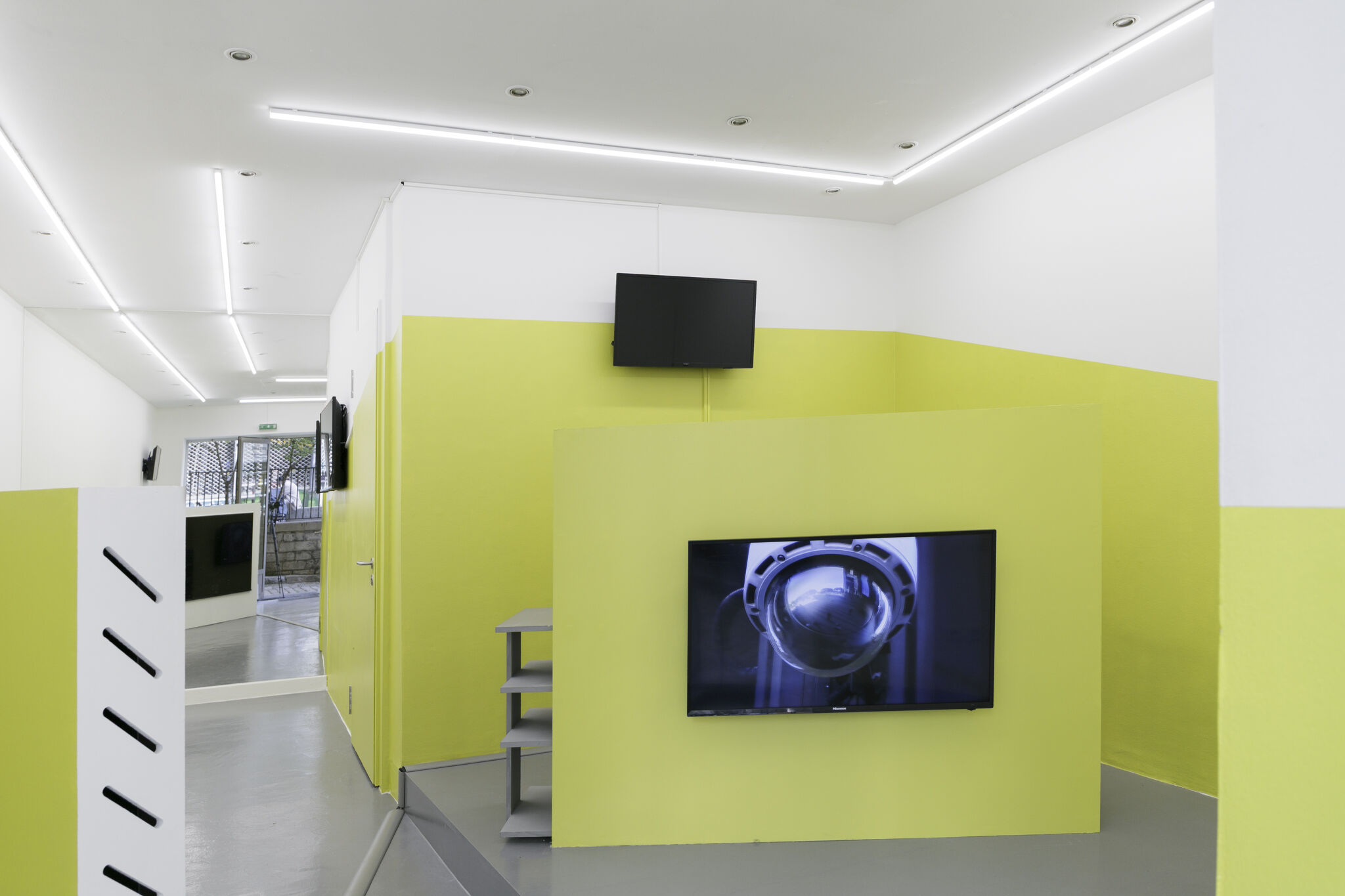
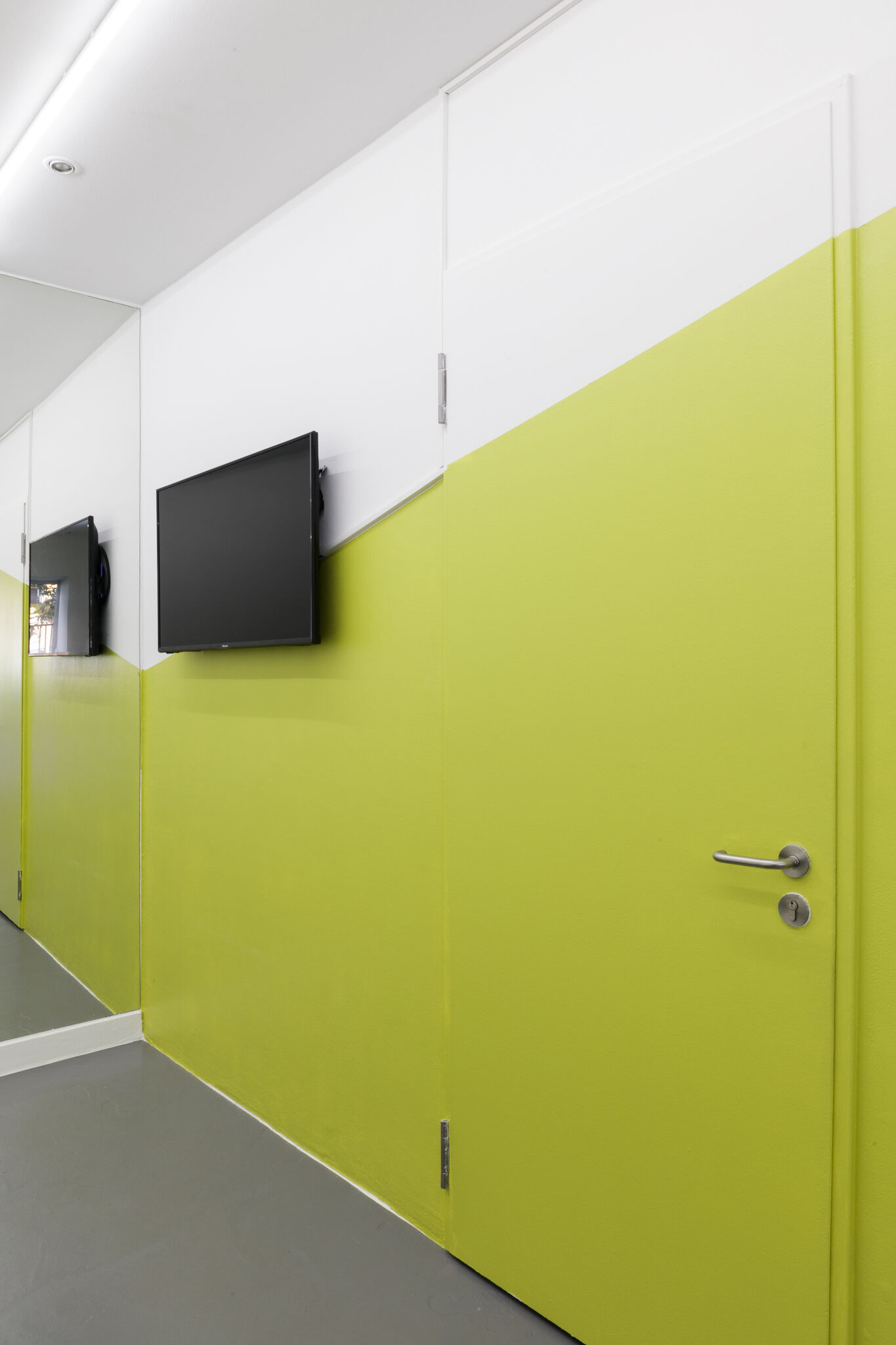
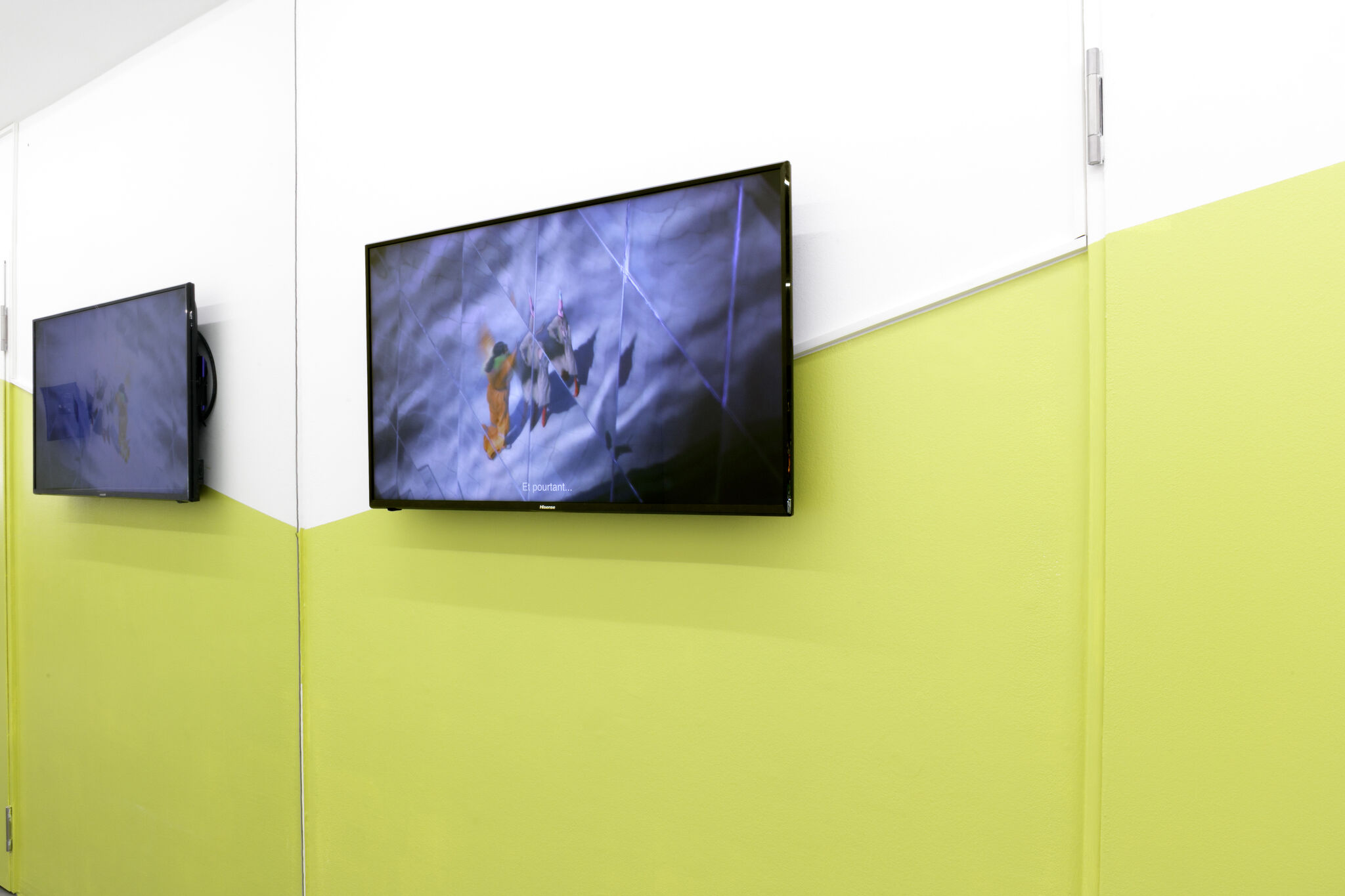
En plus de ce parti pris formel, il est également question de doubles, de simulacres et de spéculation dans l’intrigue centrée sur des produits dérivés d’actions boursières appelés “produits miroirs”. Il s’agit de produits de remplacement proposés sur le marché quand, à cause d’une économie trop faible par exemple, des sociétés ne disposent pas des droits de vente sur le produit d’origine. Mettant en scène des agents secrets clownesques aux attitudes suspectes quoique passant inaperçues – tout paraîtrait-il normal dans un monde insensé ? –, la fiction est diffractée sur plusieurs écrans dans l’espace d’exposition travesti en administration publique tentant de compenser le climat d’austérité par des murs colorés.
Rares sont les œuvres qui décrivent un monde aussi désespéré avec autant d’entrain. À ce stade de la lecture, difficile de retenir ses hanches d’accompagner le tempo de la bande son (conçue par Miguel Garutti) qui confère à l’installation vidéo l'énergie d’un ballet, par delà l’épuisement psychique et corporel des protagonistes. Le comique, présent à forte dose dans toute l'œuvre de Liv Schulman, est loin d’être le seul ressort critique ni la seule forme d’émancipation. C’est bien d’un possible changement d'optique puis de mode d’agir dont Sirco Ceguro se fait l’allégorie en remplaçant la notion d’opacité (du pouvoir, de la finance) par celle de réflexion. Et l’on voit bien comment, dans le cycle mortifère de la répétition, de légères variations du reflet peuvent faire apparaître quelque chose d’inattendu.
Julie Portier
The first time Liv Schulman got money to make a film – a $1000 grant from a private art foundation – she decided to document the rapid shrinking of the sum as she had it converted from one currency to another. La Desaparición (2013) follows her while she makes her way to a number of currency exchange offices in the tri-border area of Brazil, Paraguay, and Argentina, where inflation has relentlessly grown since the economic slump of the 2000s. As she loses control of her money, the artist in front of the camera shows signs of losing control of herself, slipping towards a state of paranoia that makes it difficult for her to distinguish between consciousness and her capital.
The city becomes her favorite film set and a character in its own right. Shaped and deformed by its economic activity, it is a living organism in which actors are introduced as disruptive elements and play deeply disturbed individuals. At the heart of Schulman’s films are indeed the ordinary psychiatric conditions of populations living in the market economy era. These disorders are evidenced in bodies racked with unchecked desires and grandiose tirades that are imbued with a melancholic mood as they spill out postcapitalist prophesies. Her alienated characters – including the most salient of them from the three-season series Control (2011-2016), the detective who wanders the city on foot – aren’t looking so much for their salvation as for a physical connection with reality and above all some meaning in what is happening in the world.
Sirco Ceguro (“Cecured Sircus", would be a good translation that likewise switches around the initials of the two words), was shot in Microcentro, the heart of Buenos Aires, whose skyscrapers with their one-way glass façades recall the identical image seen in any commercial center around the world while concealing an economy on the brink of collapse. Except for a lone scene that shows some kind of spying taking place, Schulman chooses to film only the shimmering surfaces of the façades. The image constantly includes in the frame the reflection of her filming what we are watching. That reflection reaches the eye at the very same time the surrounding reality does in an effect of reciprocal contamination and reversibility that remains Liv Schulman’s secret sauce and source of her unique art, her great asset.
Beyond this formal conceit, however, the film also deals with doubles, simulacra, and speculation (drawing on the mental and financial senses of this last word as well as its Latin root, speculum, mirror) in a plot centered on market derivatives known in that part of the stock-trading world as "mirror assets". These are substitute assets that are introduced into a market when companies, due to a weak economy for example, no longer have sales rights to the original assets. The fictional story features clownish secret agents whose look and behavior would raise heaps of suspicions were it not for the fact they slip totally under the radar – wouldn’t everything seem normal in a bonkers world? The narrative, moreover, is diffracted, split over several screens in the exhibition venue, which has been disguised to look like some public administrative bureau trying to compensate for the prevailing austere mood with colorful walls.
There are precious few works that describe with so much excitement a world that is so desperate. At this point in watching Sirco Ceguro, it’s hard to keep your hips from swaying to the beat of the soundtrack (created by Miguel Garutti), which lends the video installation the energy of a ballet beyond the protagonists’ psychological and bodily exhaustion. Schulman’s work has a large dose of the comic throughout but that trait is far from being the only tool for her sharp critique or the only form of emancipation. Sirco Ceguro, by replacing the concept of opacity (in terms of power and finance) with that of reflection, also morphs into an allegory about a possible change of outlook and way of acting. And we clearly see how in the deadly cycle of repetition slight variations in the reflection can bring something unexpected into view.
Julie Portier
translation by John O'Toole
Liste des œuvres :
List of works :
Sirco Ceguro, 2026
installation vidéo
Réalisation et scénario : Liv Schulman
Production générale : Daniela Varone
Assistante à la réalisation : Lucía Benavente
Direction de la photographie : Daniela Prado Sarasúa
Son direct : Chiara Ribaudo et Emma Dupuy
Avec : Bel Gatti, Iara Portillo, Ana Paula Méndez, Lulo Demarco
Costumes : Vil Schulman
Assistant·es : Patricia Pedraza, Félix Kornberg, Juanita Tapia
Conception sonore, mixage et composition musicale : Miguel Garutti
Montage : Liv Schulman
Étalonnage : Armin Weihmuller Marchesini
Graphisme : Vanina Scolavino
Graphisme : Tom Cazin
Régie : Alexis Puget , Maxime Naudet, Lina Abdelhafez, David Rossi, Pierre-Olivier Arnaud, Mona Chancogne
Traduction et sous-titrage : Julie Portier avec Mao Welde et Vil Schulman
Sur une invitation de Julie Portier
Sirco Ceguro, 2026
video installation
Direction and screenplay : Liv Schulman
General production : Daniela Varone
Assistant director : Lucía Benavente
Director of photography : Daniela Prado Sarasúa
Direct sound : Chiara Ribaudo and Emma Dupuy
With : Bel Gatti, Iara Portillo, Ana Paula Méndez, Lulo Demarco
Costumes : Vil Schulman
Assistants : Patricia Pedraza, Félix Kornberg, Juanita Tapia
Sound design, mixing, and music composition :
Miguel Garutti
Editing : Liv Schulman
Calibration : Armin Weihmuller Marchesini
Graphism : Vanina Scolavino
Graphism : Tom Cazin
On-site work : Alexis Puget , Maxime Naudet, Lina Abdelhafez, David Rossi,
Pierre-Olivier Arnaud, Mona Chancogne
Translation and subtitles : Julie Portier with Mao Welde and Vil Schulman
On an invitation from Julie Portier