
BDPD
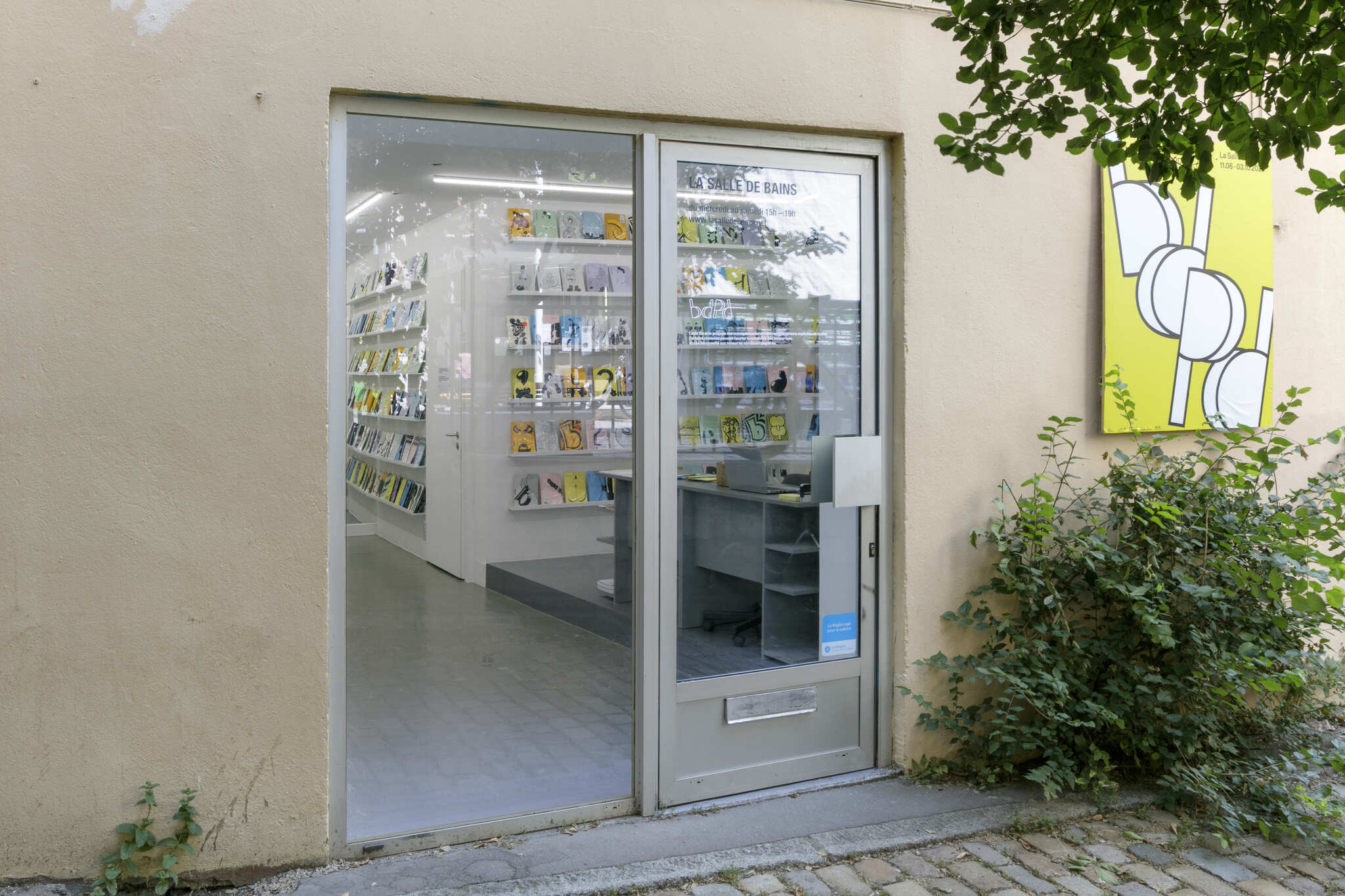
Quand j’expliquai le projet « BDPD » à Mona Chevalier, la coordinatrice de La Salle de bains qui accueille les publics du mercredi au samedi, je lui demandai si elle se sentirait à l’aise à l’idée de parler des images explicites que contiennent les bandes dessinées homoérotiques de cette librairie temporaire. Elle me répondit simplement : « Il a toujours été clair pour moi que nous montrerions des lettres qui s’aiment. »
Évoquer cet échange, qui m’a surprise et fait sourire, m’amène à aborder deux préalables : « BDPD » est une fiction, et je suis pétrie d’un trait culturel très français que l’artiste catalan Francesc Ruiz taquine, à savoir la prégnance de la censure dans l’histoire de l’édition française, et dans la bande dessinée en particulier.
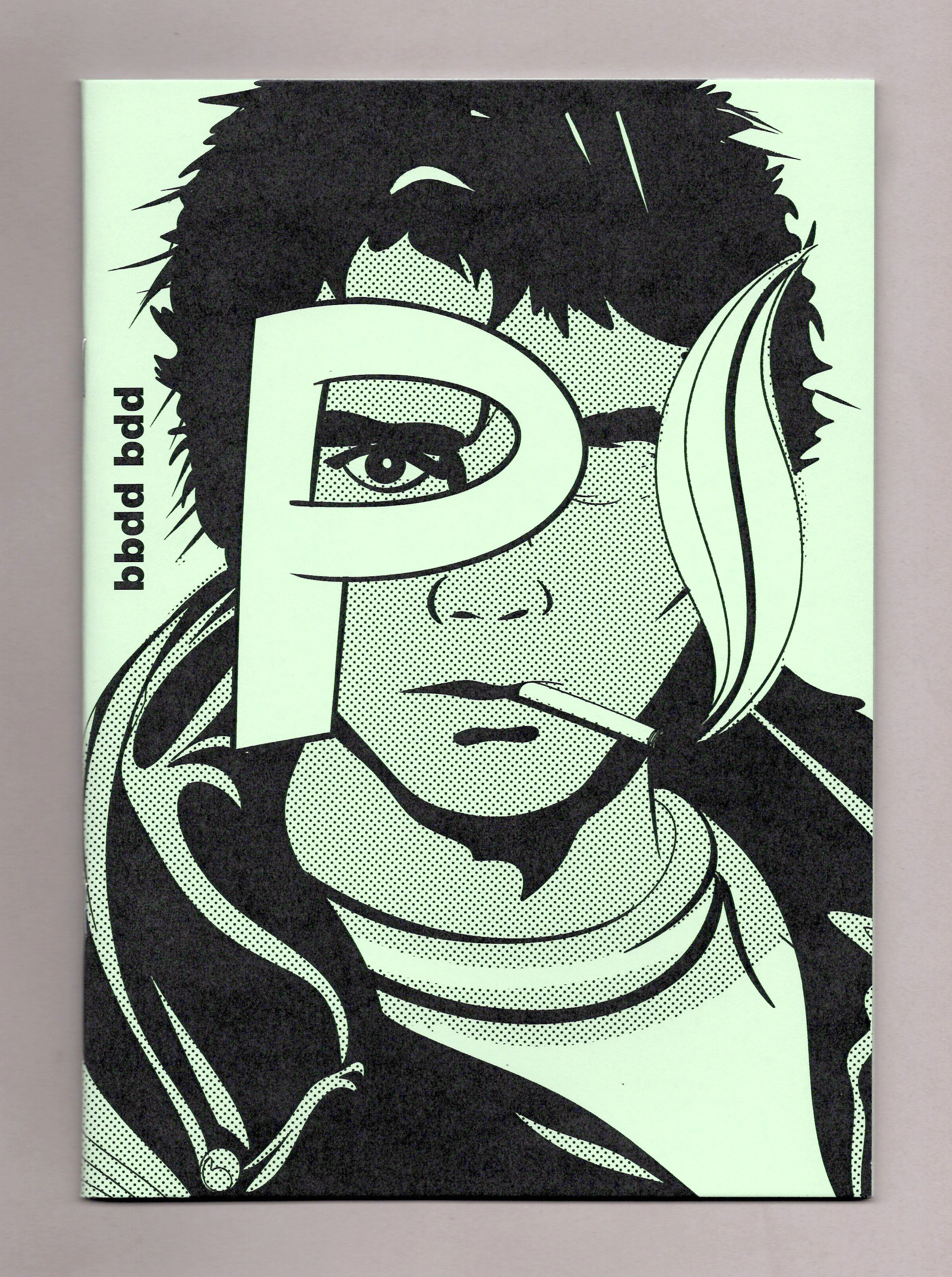
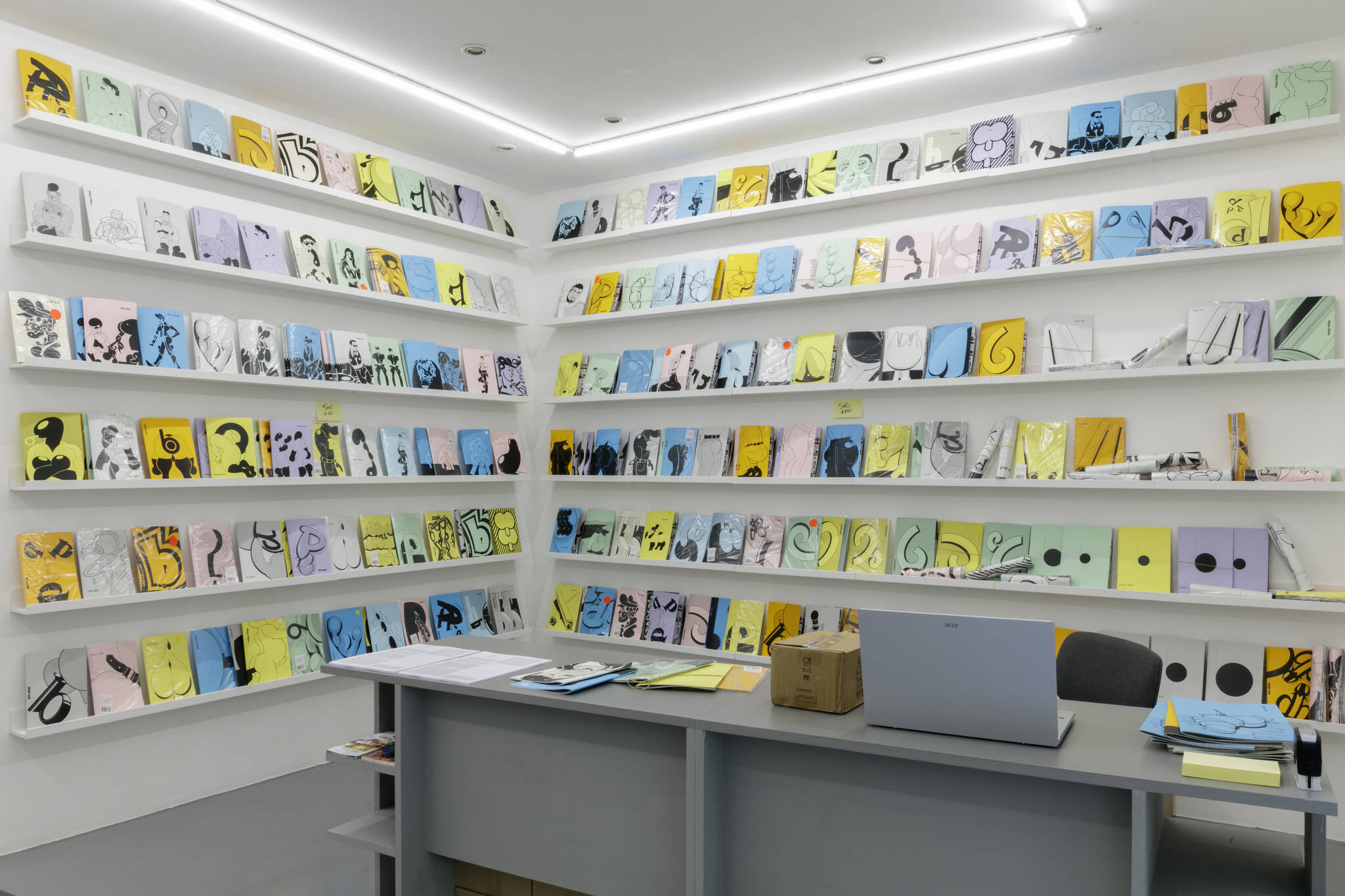
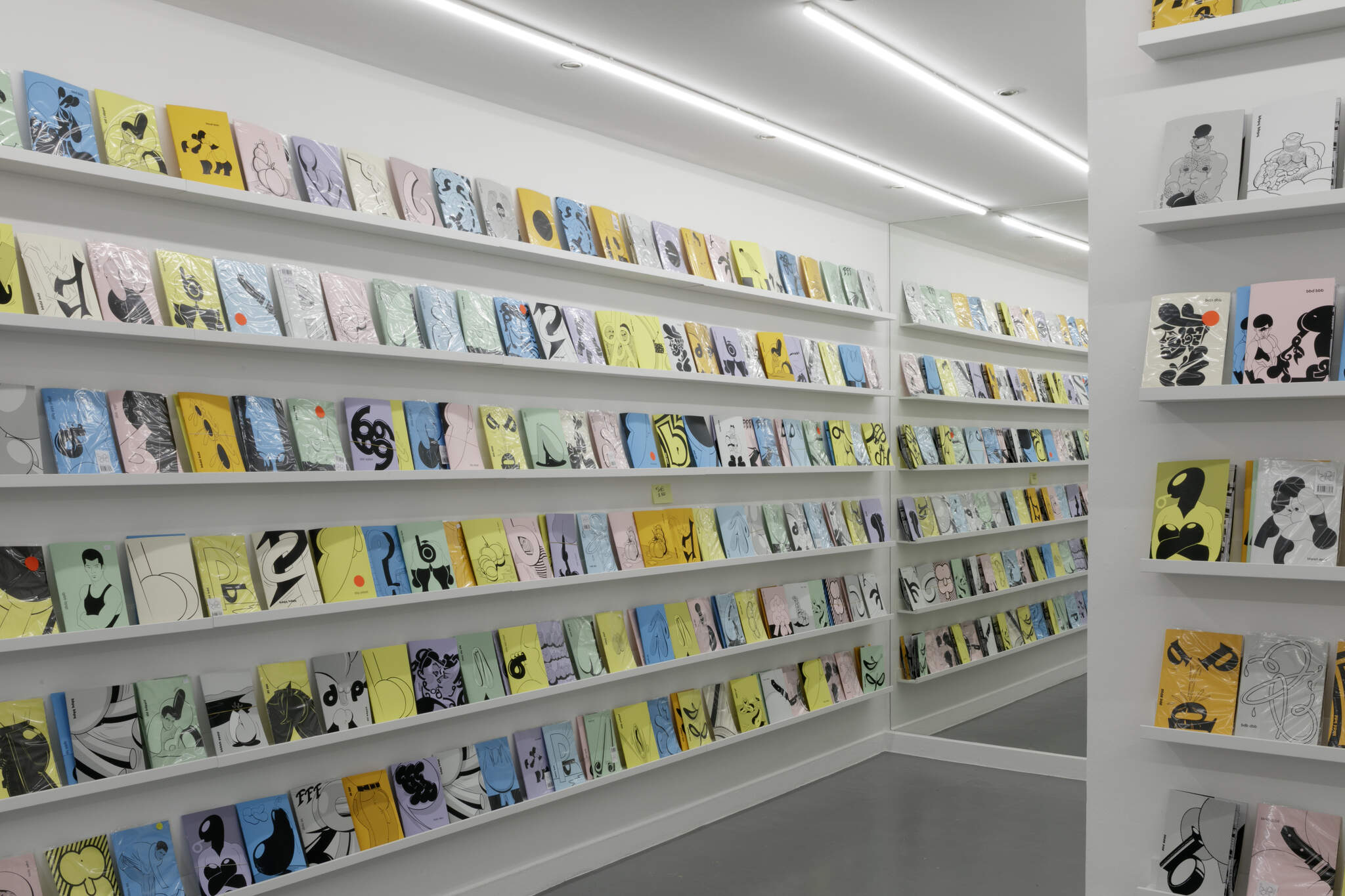
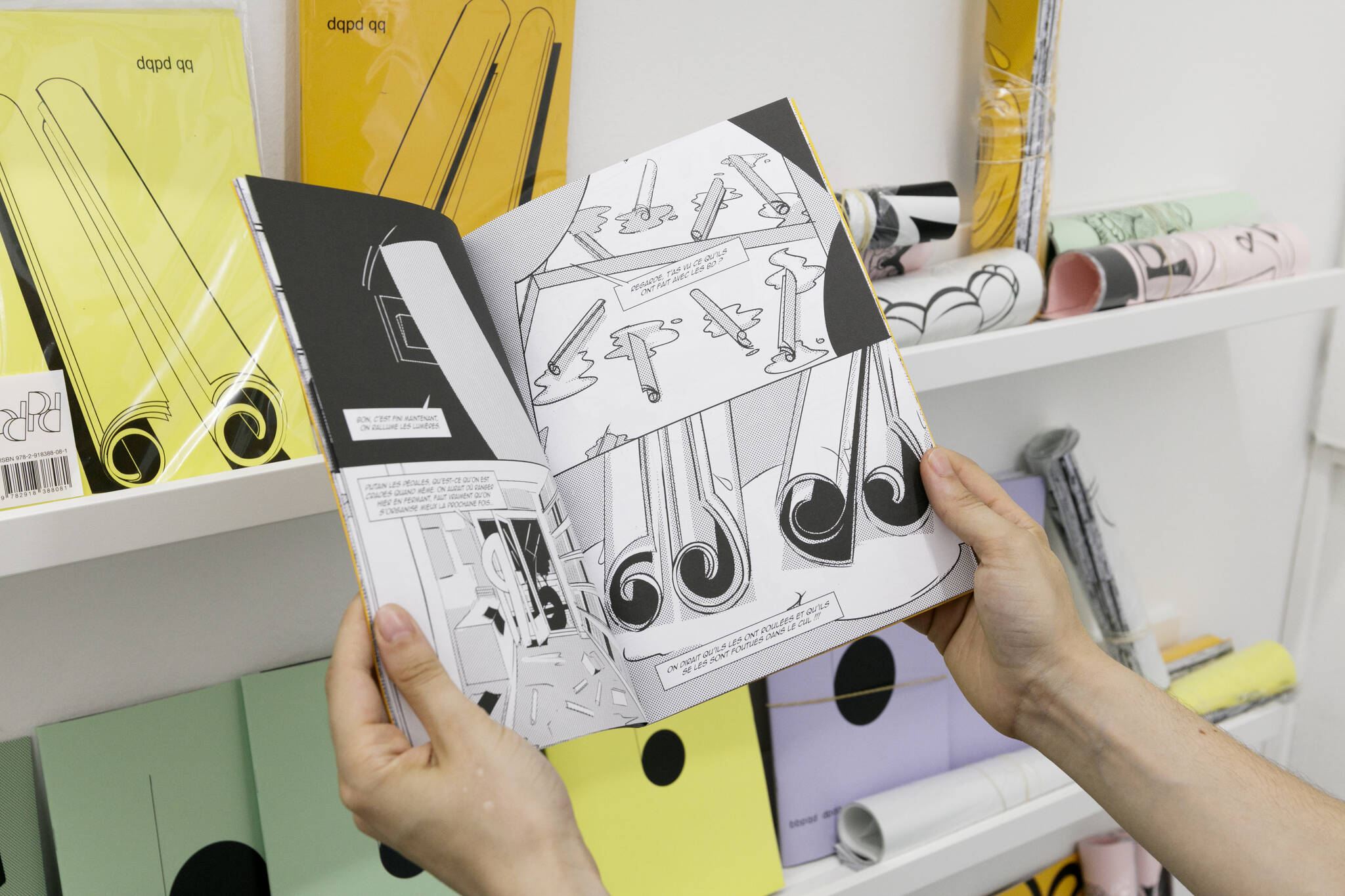
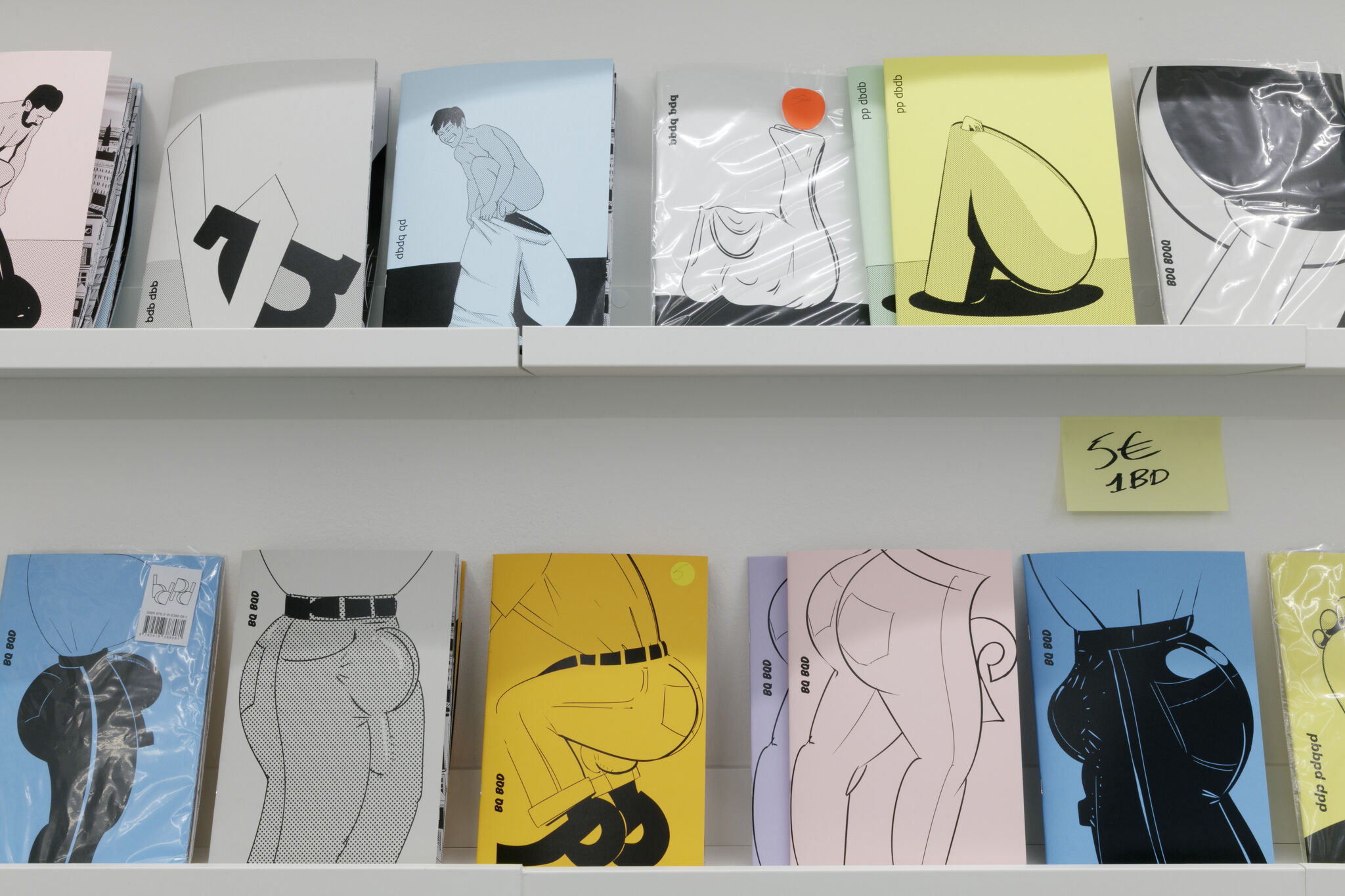
Je commencerai par ce second point pour rappeler que la France est l’un des pays qui publie le plus de bandes dessinées, le genre littéraire le mieux vendu en librairies ; mais qu’il est aussi celui où la censure s’applique toujours à l’édition, en vertu d’une loi de 1949. C’est dans ce paradoxe d’une profusion surveillée que s’inscrit le projet de Francesc Ruiz. Ex-libraire et fin connaisseur de la scène française de bande dessinée gay, il en collectionne les publications depuis plus de vingt ans, auxquelles ses lettres mutantes et l’aventure qu’elles vivent dans le scénario pornotypographique qu’il a imaginé adressent de nombreux clins d’œil. Ce type de publications a été peu collectionné par les institutions publiques. Or, pour l’artiste, cette « camelote érotique » est révélatrice des rapports de pouvoir et de la morale qui nimbent les images du désir.
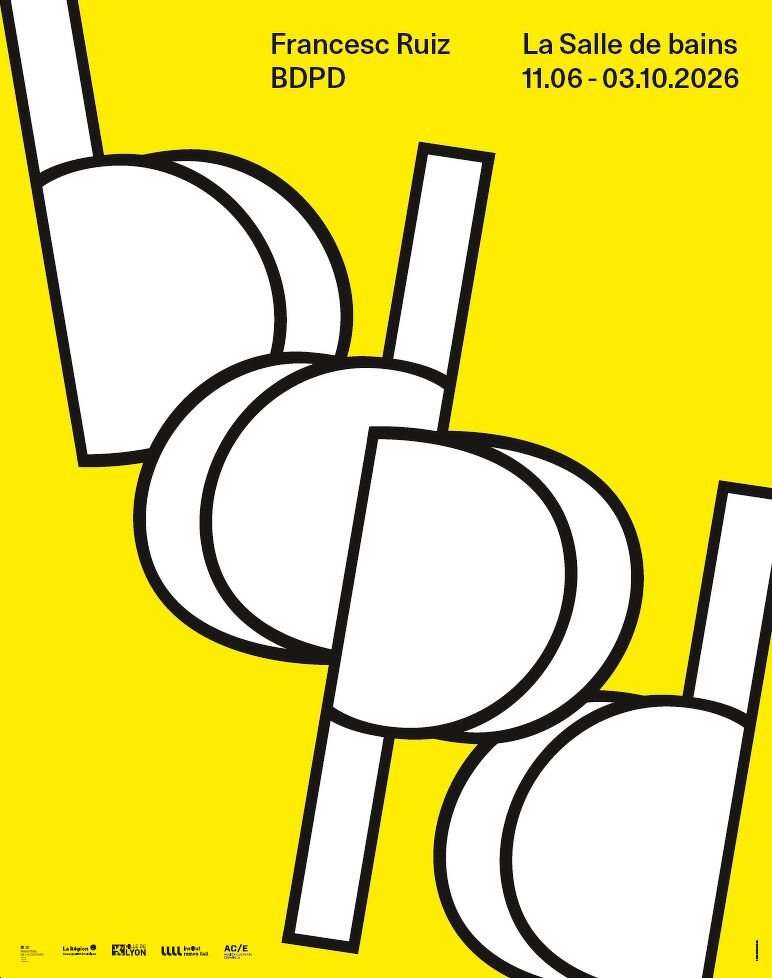
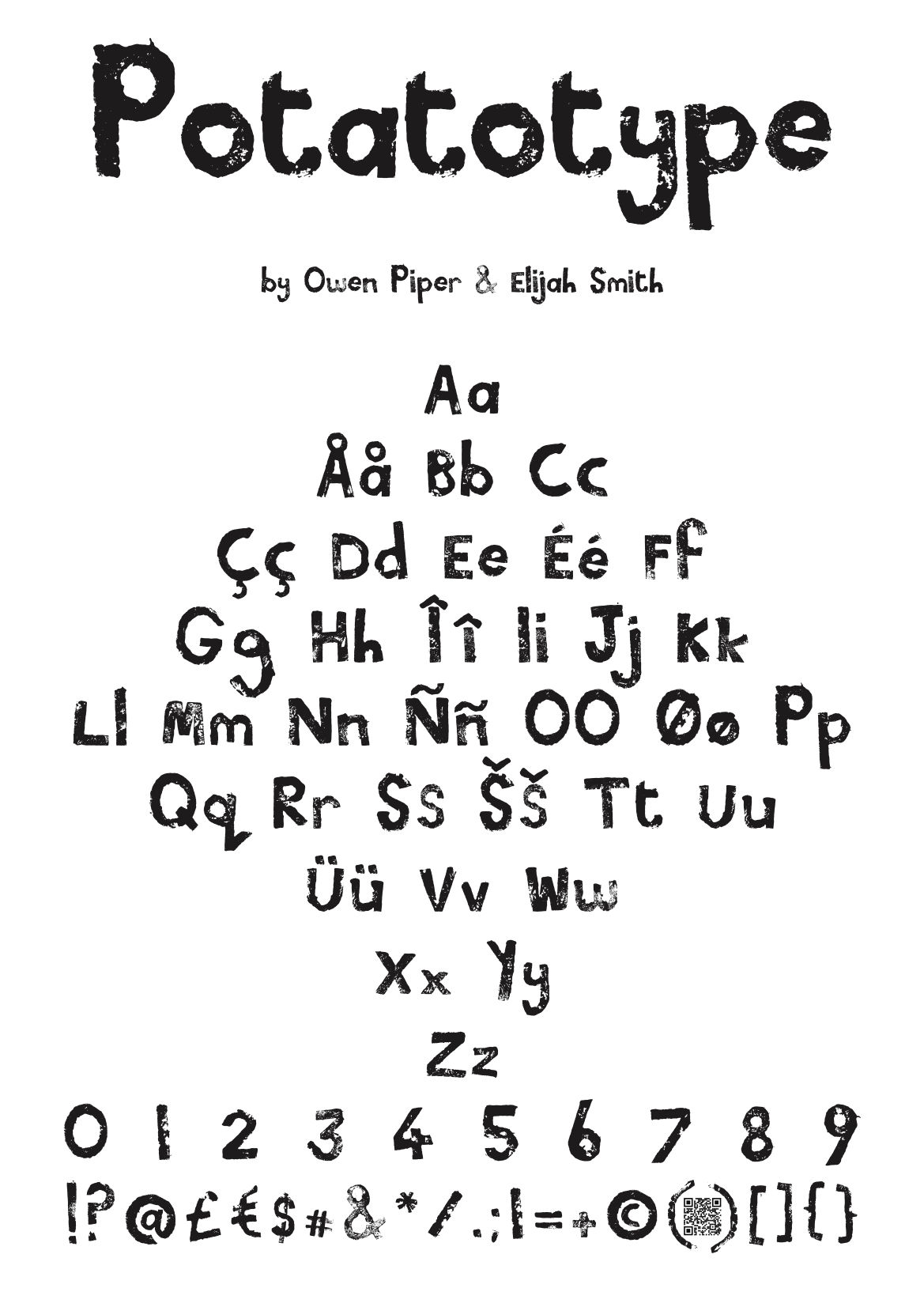
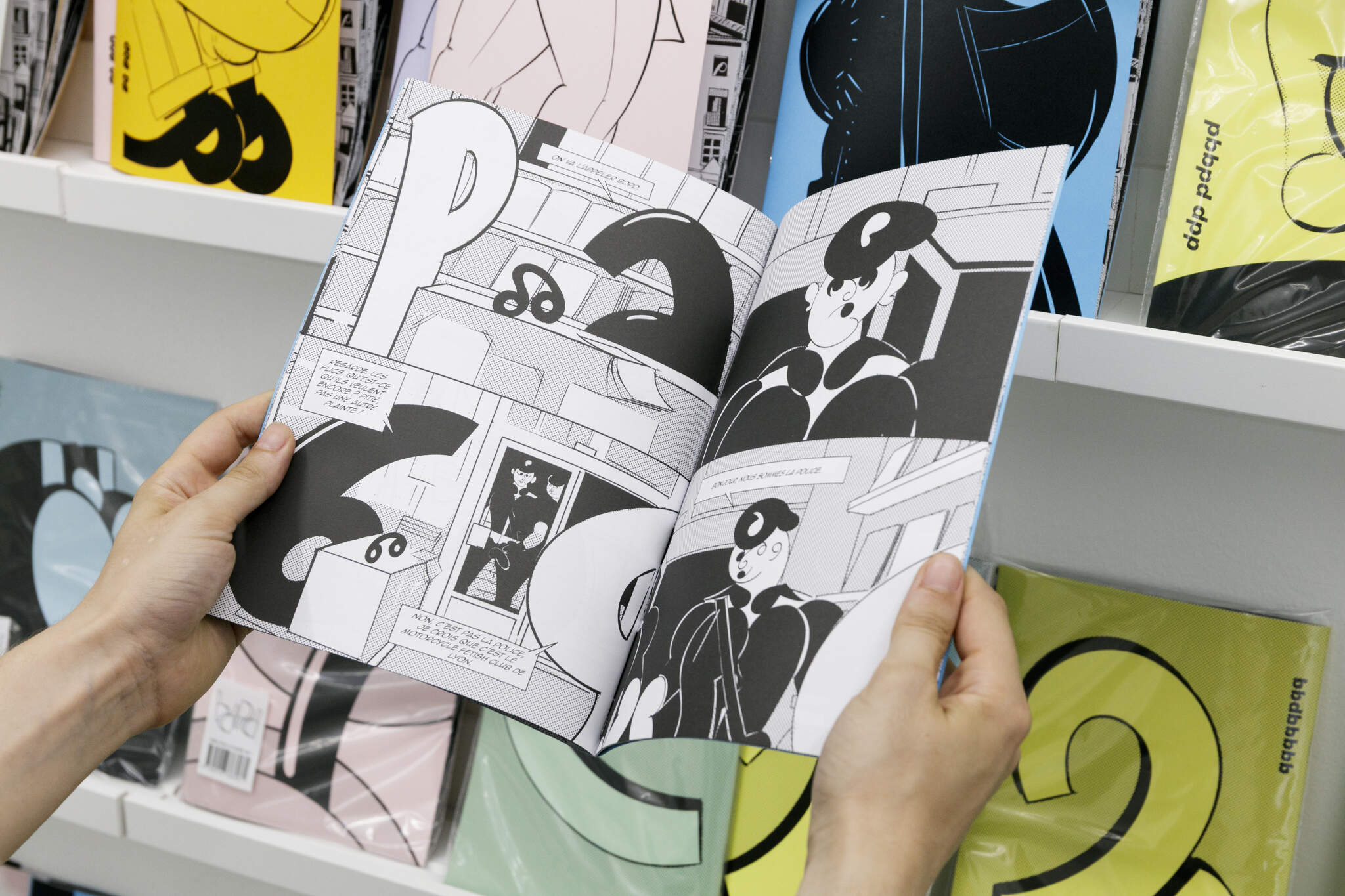
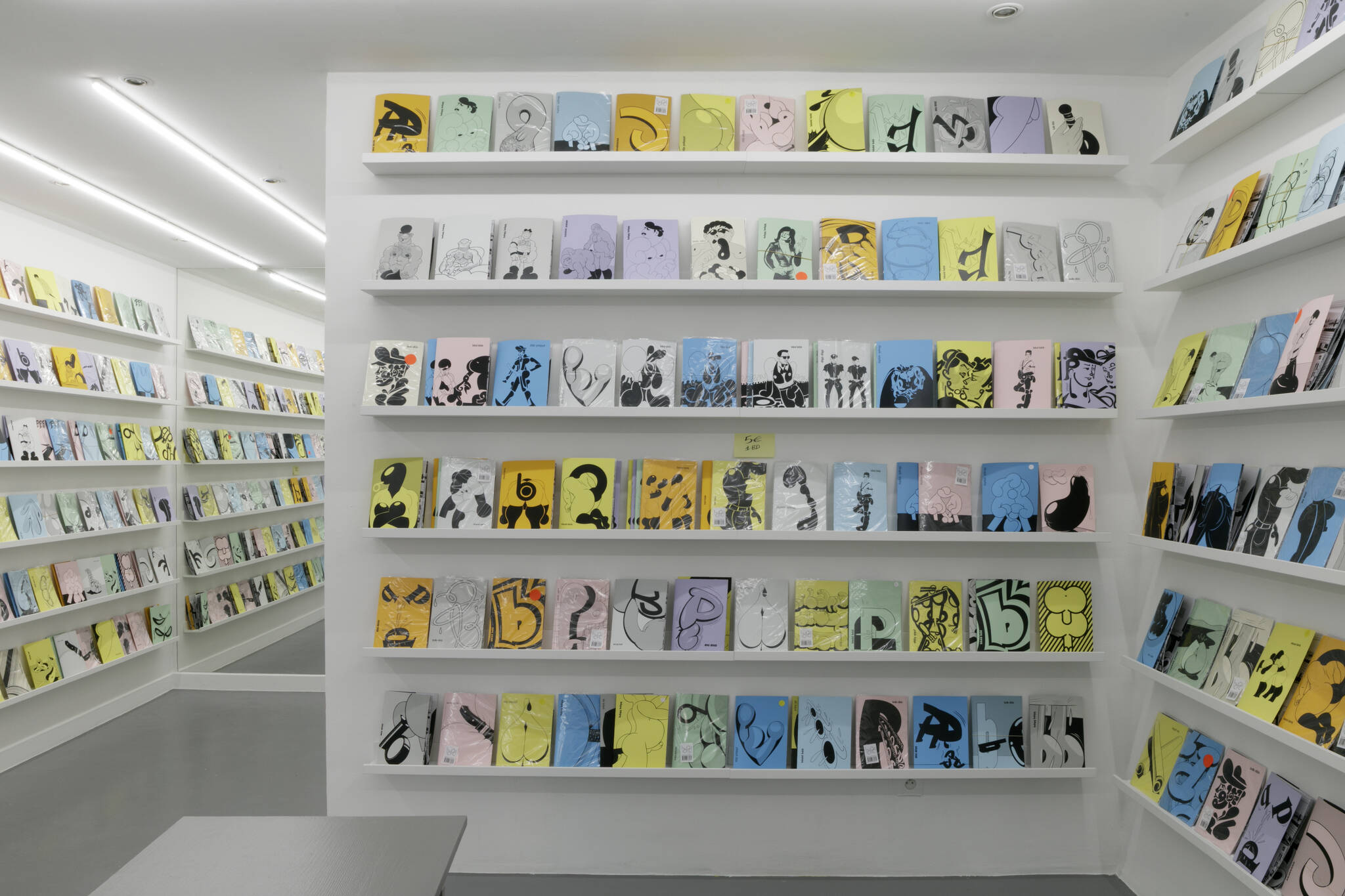
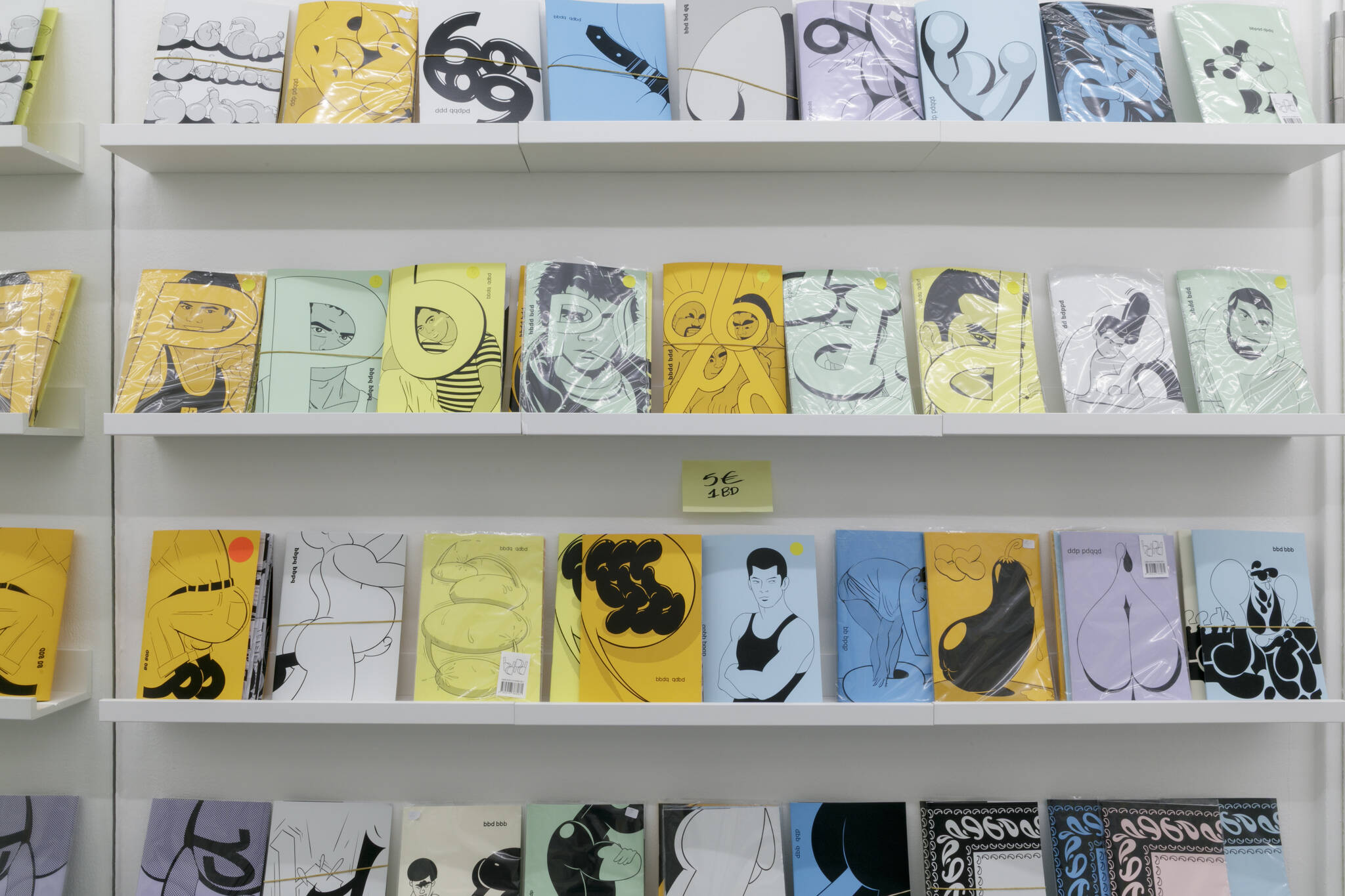
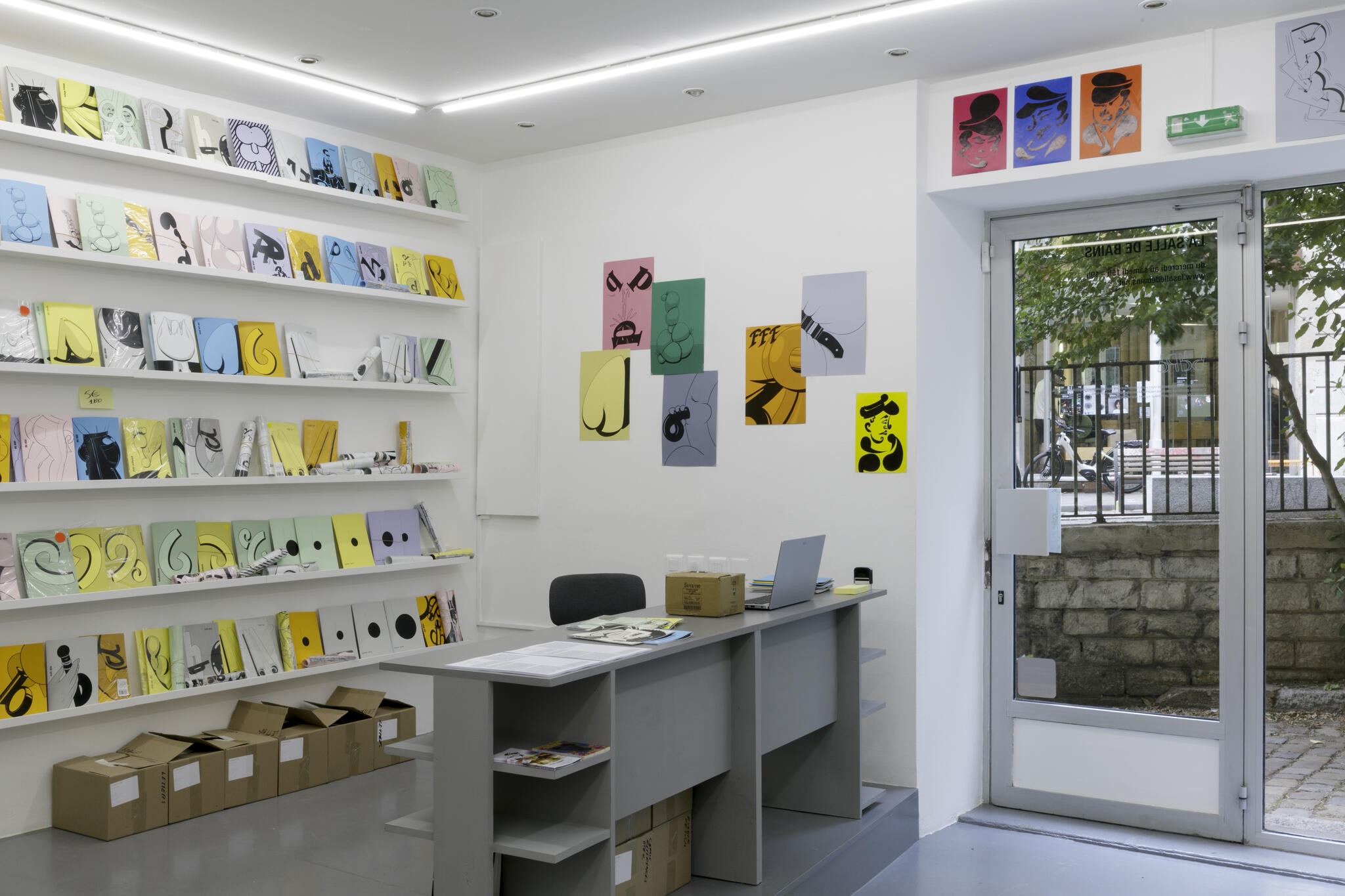
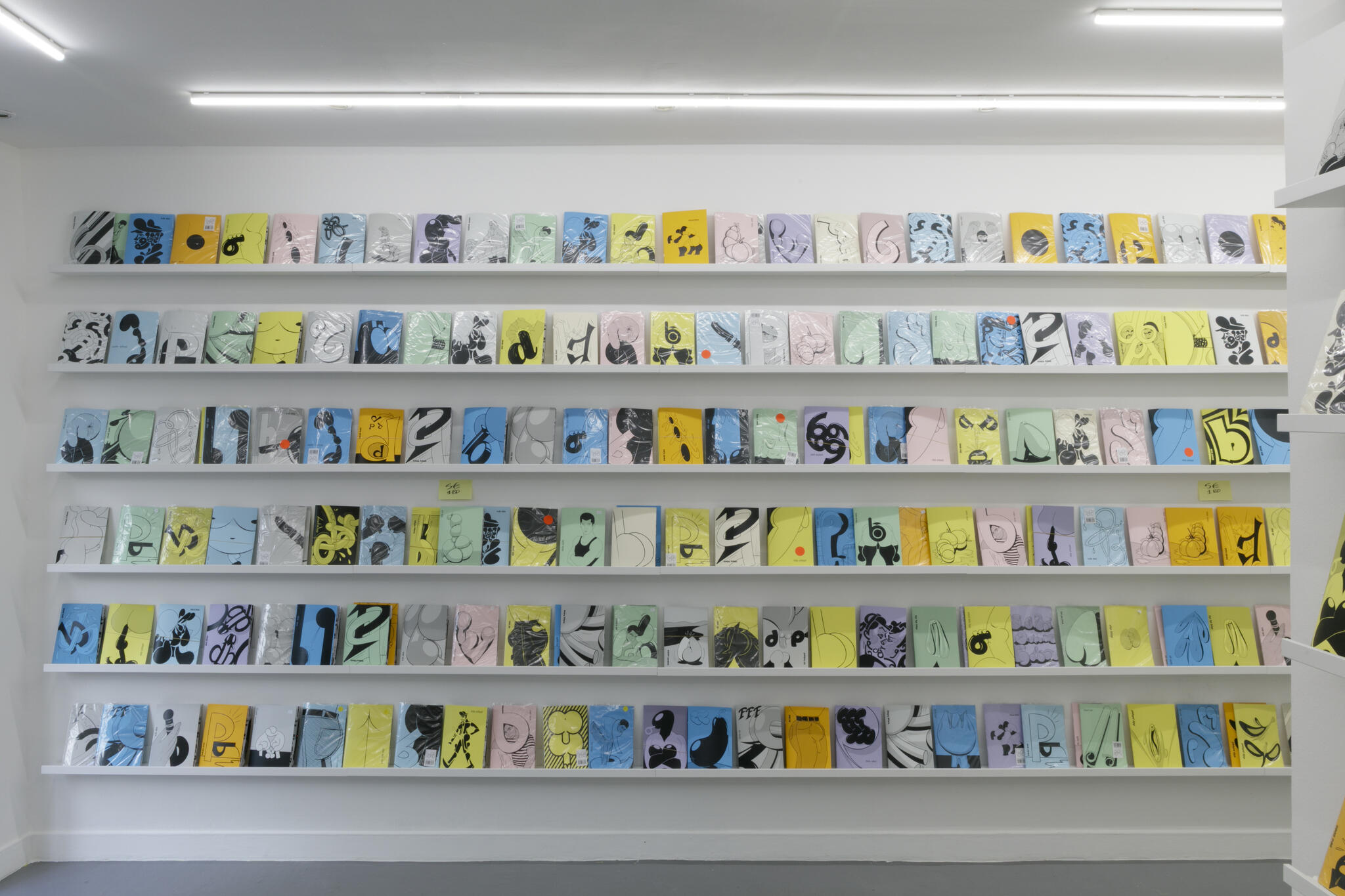
Mais « BDPD » est avant tout la fiction d’un monde de lettres tirées du panthéon artistique et graphique de Francesc Ruiz. Elles permutent, se retournent, se courbent et forment, en bas de casse, seules ou accolées, une assemblée de personnages aux formes charnelles. Le rideau baissé, s’exprime le climax de leur inventivité, que l’on croit un temps stoppée par l’intervention de la police des caractères, avant que celle-ci ne se montre plus fantasque encore que les lettres qu’elle visite. Tout le scénario paraît tiré du rêve érotique d’un bibliophile délirant sur la vie privée des caractères d’imprimerie. Tout en haut de ce panthéon figurent les mail artists Ray Johnson et Ulises Carrión. Ce dernier publia en 1975 un manifeste affirmant le livre d’artiste comme forme d’art à part entière. L’année suivante, à New-York, la critique d’art Lucy Lippard co-fondait la librairie Printed Matter dédiée au livre d’artiste. Rappeler ceci, c’est insister sur la transgressivité de certaines pratiques artistiques qui nous paraissent aujourd’hui des plus admises mais qui, il y a cinquante ans à peine, bousculèrent le conformisme de l’art.
À quoi sommes-nous conformes, voici l’une des questions qu’adresse cette exposition qui se tient à Lyon, l’une des capitales européennes de l’imprimerie dès le xve siècle, et dans le quartier du bas des pentes. En 1975, les travailleuses du sexe s’y étaient fédérées pour revendiquer leurs droits. Des militants gay avaient rejoint leur mobilisation à quelques rues de la place Sathonay, unissant leurs forces à celles qu’on ne voulait pas reconnaître comme des professionnelles et qui, comme elles, subissaient des formes violentes de répression. « BDPD » s’inscrit dans la double filiation de l’histoire lyonnaise de la typographie et des luttes contre la normativité des intimités, tout en en pensant les enjeux actuels, ce en « queerisant » les références à Tom of Finland, Ralf König ou encore aux Tijuana Bibles. D’autres manières d’être, de vivre sa sexualité et de s’aimer – entre personnes ou entre lettres – se font alors jour dans cette œuvre-librairie, la quatrième de Francesc Ruiz, après celles de Londres (Gasworks, 2010), Moss (Biennale Monumentum, 2019) et Busan (Biennale de Busan, 2020).
Camille Richert
Mona Chevalier is the coordinator of La Salle de bains, which is open to the public Wednesdays to Saturdays. When I explained the “BDPD” project to Mona, I asked her if she would be comfortable with the idea of talking about the explicit images from the homoerotic graphic novels found in the show’s temporary library. She offered me this simple answer, “It’s always been clear to me that we would show letters that are loved and love in return.”
Bringing up this exchange which surprised me and made me smile leads me to address two preliminary points. “BDPD” is a work of fiction and I am steeped in a very French cultural trait that the Catalan artist Francesc Ruiz is poking fun at, that is the pervasiveness and impact of censorship in the history of French publishing and graphic novels in particular.
I’ll begin with the second point by recalling here that France figures among the countries that publish the greatest number of bound comic books – the term “graphic novels” doesn’t really cover every aspect of these publications, the best-selling literary genre in French bookshops. Yet the French Republic is also the country where censorship still applies to publications by virtue of a law dating back to 1949. Ruiz’s project then is grounded in the paradox of a monitored profusion. A former bookseller and connoisseur of the French gay comic book scene, Ruiz has been collecting these publications for over twenty years. To them are addressed the many allusions in his mutant letters and the adventure they experience thanks to the pornotypographic plot he has dreamed up. Public institutions have rarely collected these kinds of publications. For the artist though this “erotic junk” reveals the dynamics of power and morality surrounding images of desire.
But “BDPD” is above all a fiction about a world of letters drawn from Ruiz’s artistic and graphic pantheon. They change and swap places, flip around, bend, and form in lowercase – alone or stuck together – an assembly of characters (in two senses of the term) and their fleshy voluptuous forms. Once the curtain has come down, their inventiveness is given free rein and builds to a climax that seems stopped for a time by the font’s intervention. Soon enough the font is shown to be even more whimsical than the letters it is inspecting. The whole scenario appears to be drawn from the erotic dream of a bibliophile madly fantasizing about the private lives of print typefaces. At the very top of this pantheon are the mail artists Ray Johnson and Ulises Carrión. The latter published a manifesto in 1975 asserting that the artist’s book is indeed an art form in its own right. The following year in New York, the art critic Lucy Lippard cofounded Printed Matter, a bookstore dedicated to artists’ books. To bring this up here is to underscore the transgressiveness of certain artistic practices that today seem widely accepted whereas hardly half a century ago they upended the artistic conformity that reigned at the time.
What do we conform to? That is one of the questions addressed by this show held in Lyon – one of the capitals of European printing beginning in the 15th century – in the Bas des Pentes (the “bottom of the slopes”) section of the city, the lower, southern part of the Pentes de la Croix-Rousse neighborhood. It was there in 1975 that sex workers organized to demand protections for their profession. Gay activists rallied to their movement several streets away from Sathonay Square, joining forces with these female sex workers whom society was reluctant to recognize as a professional class. Like them, the gay activists also faced violent forms of repression. “BDPD” then is part of the dual legacy of the typographic history of Lyon and the struggle against the normativity of intimate relations, while rethinking today’s issues in this regard by “queering” references to Tom of Finland, Ralf König, and the tradition of Tijuana bibles. Other ways of being, living one’s sexuality, and loving – between individuals and letters – come to light in this bookshop-work of art, Ruiz’s fourth after those mounted in London (Gasworks, 2010), Moss (Momentum Biennial, 2019) and Busan (Busan Biennale, 2020).
Camille Richert
Translation : John O’Toole
1 In this title the letters BD form a bilingual French-English pun; BD in French stands for bande dessinée, or graphic novel, a wide-spread and very respected genre of publication. In English, the letters, written B&D, are of course short for “bondage and discipline.” PD, on the other hand, is a homophone in French for pédé, short for pédéraste, or pedophile. It is the common
slang term for fag(got), poof(ter), homo. Finally, in the French bande of bande dessinée there is a possible distant echo of the verb bander, which can mean a number of things but, given the hint of the erotic in the context, suggests the familiar French term for having /getting a boner (US) and having a stiffy (UK) – trans. note.
Liste des œuvres :
List of works :
installation
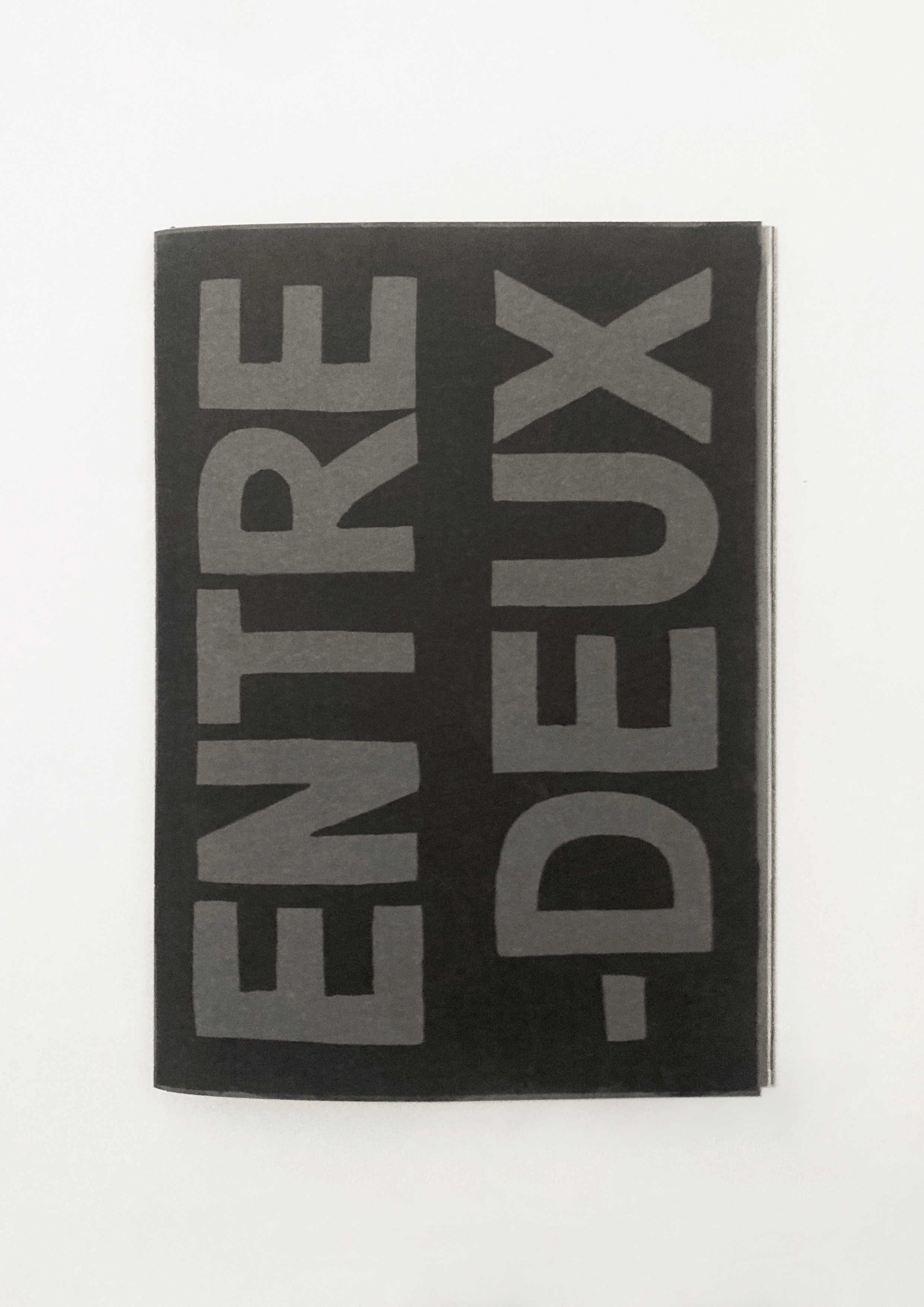
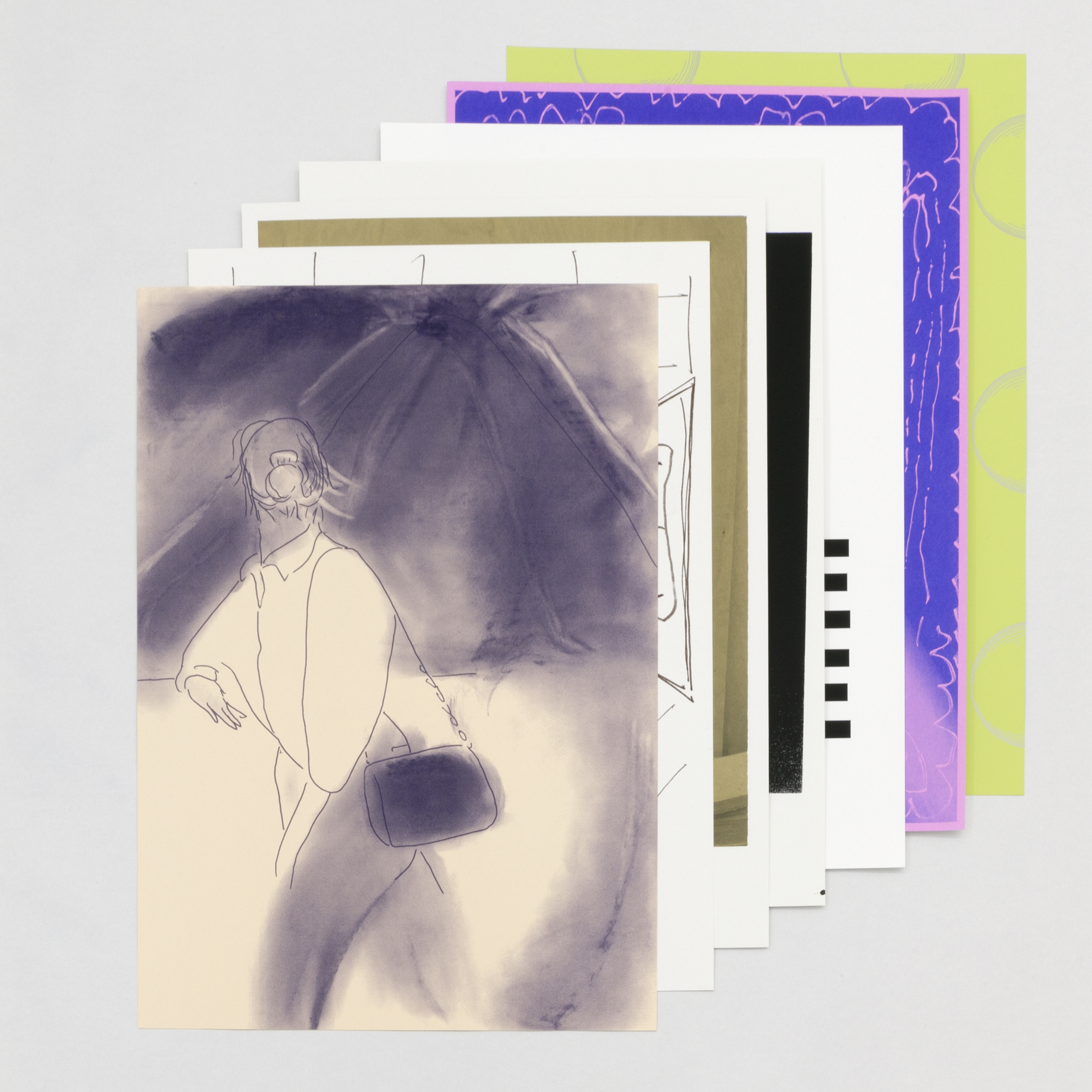
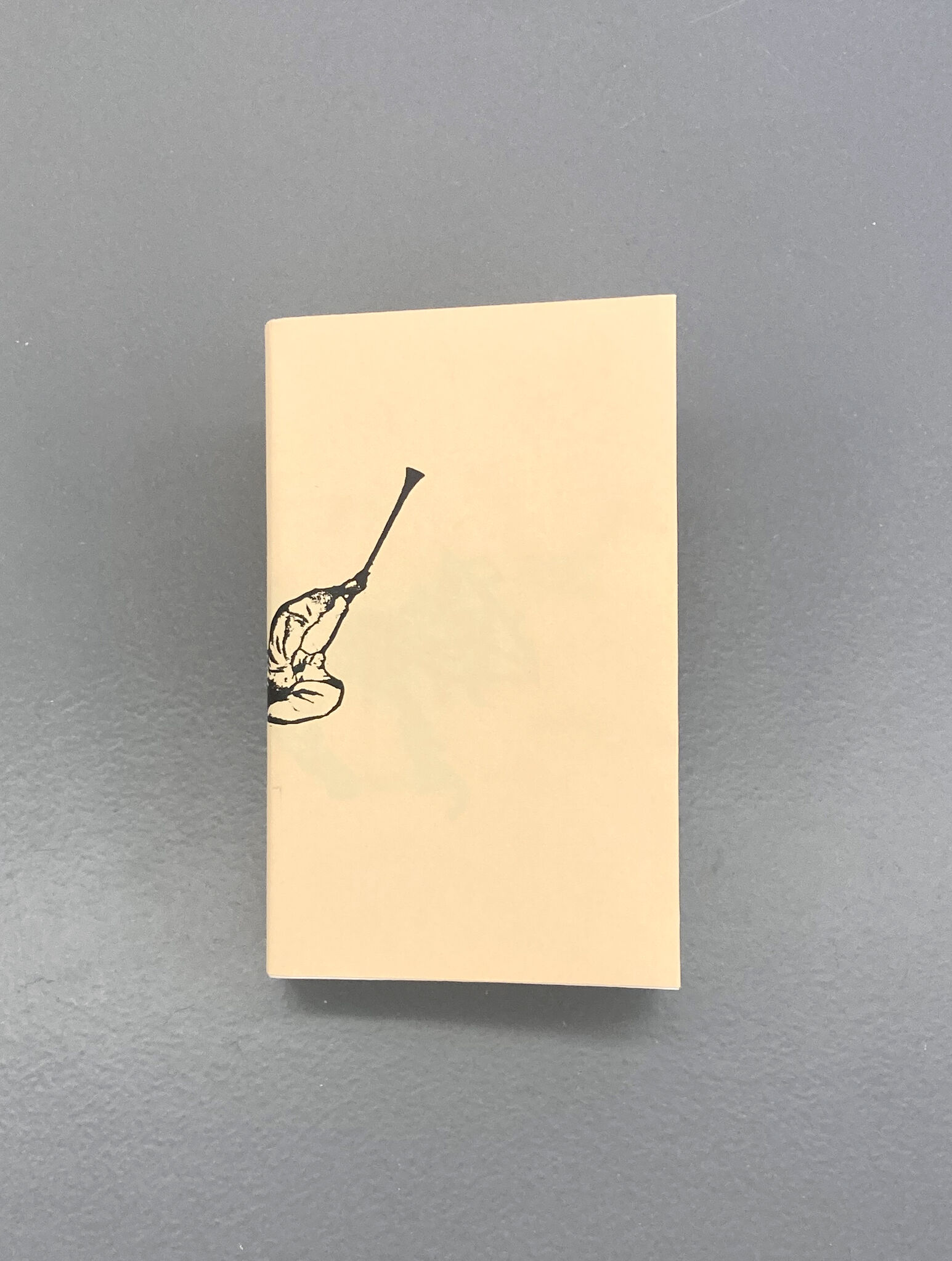
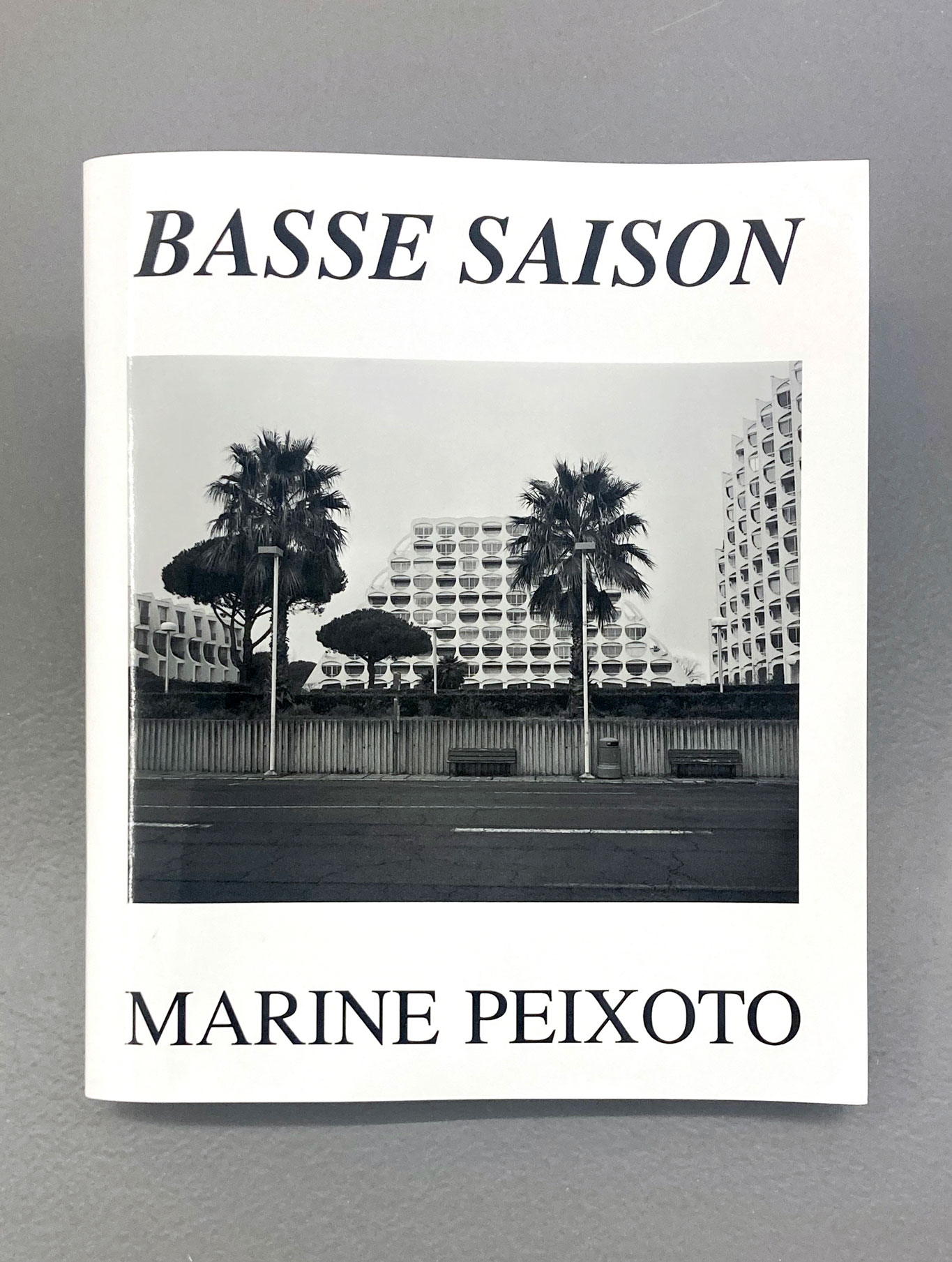
Impressions numériques, 2000 exemplaires,
17 ×24cm (fermé), étagères.
installation
Digital prints, 2000 copies, 17 × 24 cm (closed),
shelves.
Francesc Ruiz vit et travaille à Barcelone. Son travail explore comment le monde est dessiné, composé, publié et distribué, en occupant de manière critique les espaces liés à l’imprimé et au capitalisme. Ses recherches portent sur les « comics » élargis, l’architecture informationnelle des kiosques, les univers manga érotiques et la logistique contemporaine. Il a représenté l’Espagne à la Biennale de Venise de 2015. De multiples institutions internationales telles que Gasworks, (Londres), Fundació Miró (Barcelone), L’IVAM, Institut Valencià d'art Modern (Valence), FRAC Corse (Corse), Museo Nacional Centro de Arte Reina Sofia, Centro de Arte Dos de Mayo (Madrid) lui ont dédié des expositions personnelles. Il est l’un des fondateurs de l’Institute of Porn Studies.
Francesc Ruiz lives and works in Barcelona. His work explores how the world is designed, composed, published, and distributed, critically occupying spaces related to print and capitalism. His research focuses on expanded comics, the informational architecture of newsstands, erotic manga universes, and contemporary logistics. He represented Spain at the 2015 Venice Biennale. Numerous international institutions, including Gasworks (London), Fundació Miró (Barcelona), IVAM, Institut Valencià d'Art Moderne (Valencia), FRAC Corse (Corsica), Museo Nacional Centro de Arte Reina Sofía, and Centro de Arte Dos de Mayo (Madrid), have dedicated solo exhibitions to his work. He is one of the founders of the Institute of Porn Studies.

Cette exposition reçoit le soutien du programme PICE de l’organisation AC/E (Acción Cultural Española) et de l’Institut Ramon Llull.
This exhibition is supported by the PICE program of the AC/E (Acción Cultural Española) organization and the Ramon Llull Institute.